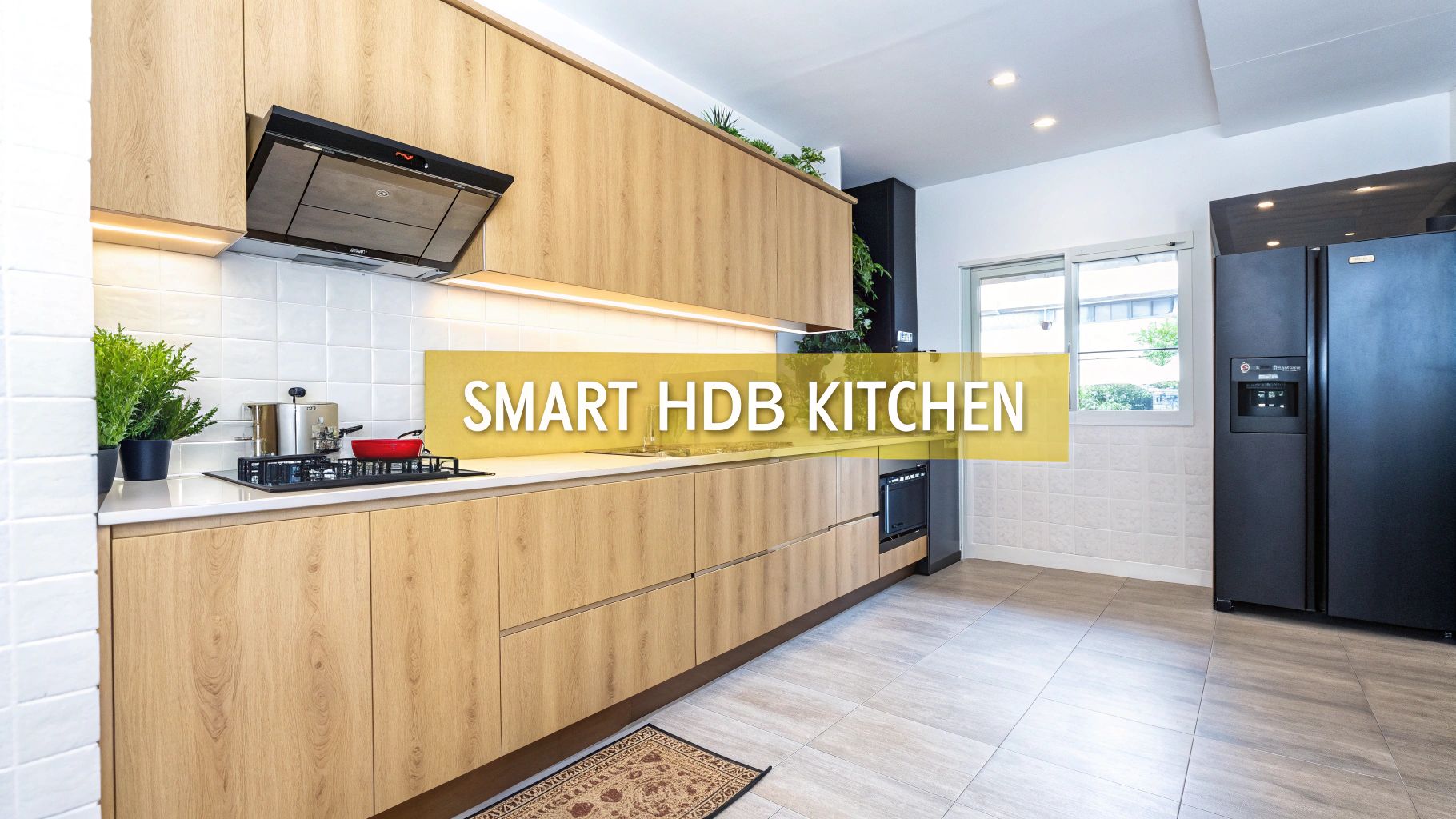
Designing a kitchen for a 3-room resale HDB is a unique challenge. You're working with a compact footprint, usually around 9 to 12 square metres, and the goal is to pack in maximum function and style. It’s a delicate balance of smart layout planning, custom storage, and careful material choices, all while navigating HDB’s renovation rules to turn a potentially dated space into the modern heart of your home.
Rethinking the Kitchen in Your Resale HDB
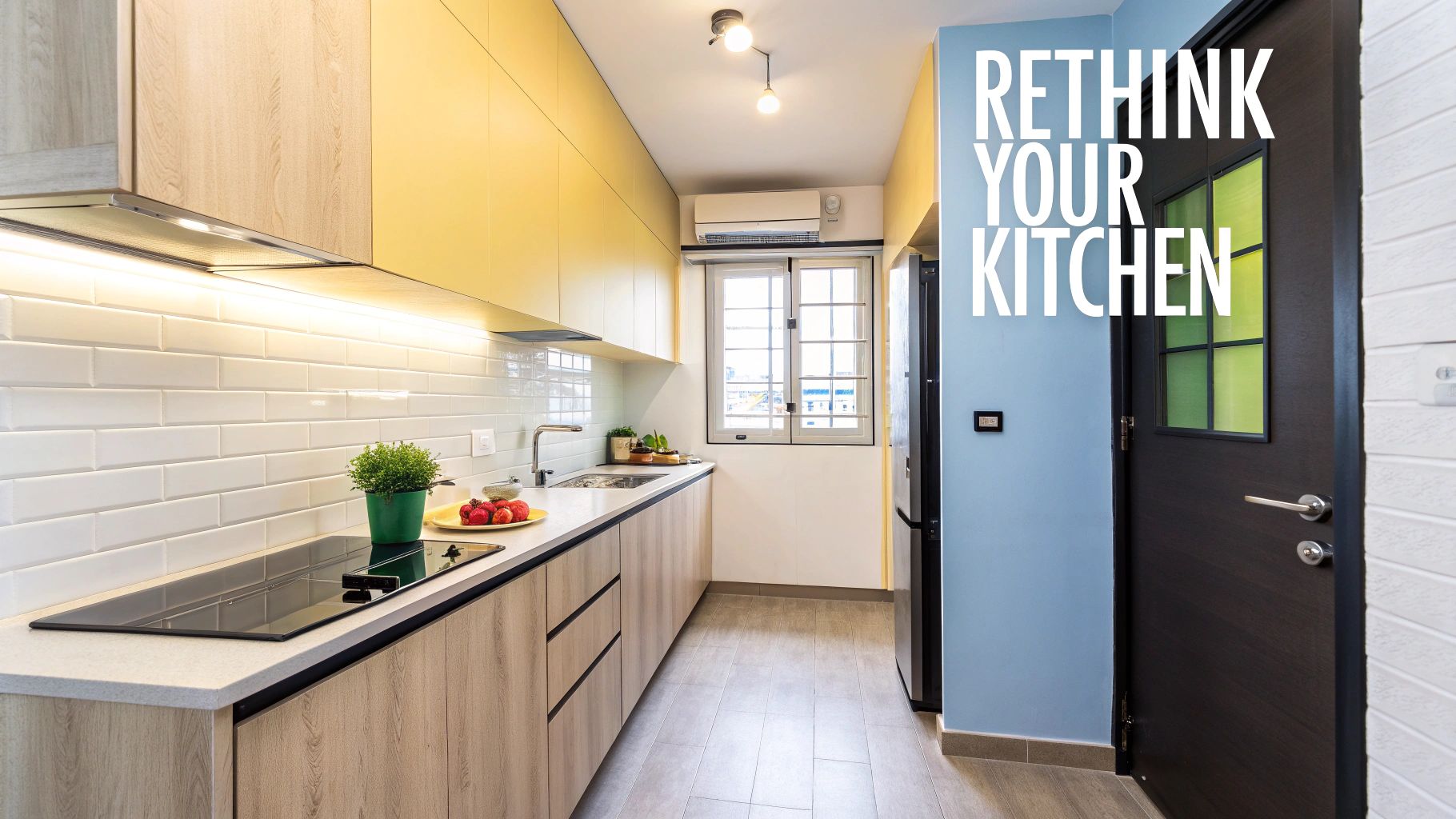
Transforming a 3 room resale HDB kitchen design is about more than just aesthetics; it's about solving real-world problems. From our experience handling countless HDB renovations, we know homeowners are looking for practical solutions to common issues: cramped layouts, outdated plumbing, insufficient storage, and navigating HDB's strict renovation guidelines.
This guide provides actionable strategies, drawn from our on-the-ground experience, to help you turn these challenges into opportunities. We'll skip the fluff and focus on the practical steps needed to create an efficient, beautiful kitchen that adds real value to your home. A solid grasp of fundamental kitchen design principles is your starting point, especially when adapting them to the unique constraints of a 3-room flat.
Start with a Clear Vision
Before a single tile is hacked, a clear vision is essential. This initial planning stage is the foundation for every decision, from layout to cabinet handles. A successful renovation is one where the final space truly aligns with your daily routines.
We always kick off a project by asking clients to think about a few key things:
- How Do You Cook? Are you a serious home chef who needs lots of counter space for prep, or do you mostly stick to simple meals? Your daily habits will define the entire workflow.
- What Do You Need to Store? Take a quick inventory of your pots, pans, and appliances. Do you need a dedicated pantry, deep drawers for cookware, or a clever spot to hide the air fryer?
- Who Uses the Kitchen? Is this space a social hub where family and friends gather, or is it a purely functional work zone? This helps decide whether an open-concept or an enclosed layout makes more sense.
- What’s Your Style? Start gathering inspiration. Are you drawn to minimalist, Scandinavian, or perhaps an industrial look? Your aesthetic will guide the palette for materials and colours.
A well-planned kitchen is more than a collection of beautiful finishes. It’s a space engineered for your life, where every element has a purpose and every movement is intuitive. This is the core of great design.
Your Pre-Renovation Reality Check
Before scrolling through Pinterest or visiting showrooms, the most critical step in any 3 room resale HDB kitchen design is a thorough assessment of your existing space. Jumping straight into hacking walls and picking out tiles without this groundwork is the fastest way to blow your budget and face frustrating delays. You have to understand the bones of your flat first.
Every resale HDB kitchen comes with its own set of rules. Some things you can change, and some you absolutely can't. The fixed elements—your non-negotiables—are things like structural columns, load-bearing walls, and, crucially, the main plumbing stacks and pipes. Identifying these from day one dictates what's actually possible for your new kitchen layout.
Working Within HDB's Renovation Rules
Navigating HDB guidelines isn’t just about dealing with red tape; it’s about ensuring the structural integrity and safety of the whole building. Hacking a wall you're not supposed to or altering plumbing without the right permits can lead to hefty fines and an order to rebuild everything at your own expense. This is precisely why hiring a licensed and HDB-registered contractor isn't just a good idea—it's essential.
This is even more critical for older resale flats. Many of these units have old electrical wiring that simply can't handle modern, power-hungry appliances like a built-in oven or an induction hob. A licensed professional can determine if a full rewiring is needed to prevent constant circuit trips or, in the worst-case scenario, a fire. Likewise, those decades-old pipes might need a complete replacement to avoid leaks that could ruin your brand-new carpentry down the line.
Your Practical Pre-Renovation Checklist
Before we even start sketching, we always walk our clients through a practical audit of their current kitchen. It’s a simple process that often uncovers hidden issues that need to be factored into the budget and timeline right from the start.
Grab a notepad and assess your kitchen, paying close attention to these key areas:
- Waterproofing Integrity: Do you see any peeling paint, water stains, or mould near the floor? Pay special attention to the areas around the sink and washing machine. Failed waterproofing is a classic problem in older flats and has to be fixed before any new tiles go down.
- Existing Wiring: How many power outlets do you have, and are they in useful spots? If they look old, cracked, or you simply don't have enough, a full electrical overhaul is almost a given.
- Plumbing Condition: Take a peek under the sink. See any leaks or rusty pipes? Is the water pressure low or the drainage sluggish? These are dead giveaways that you’ll need to budget for new plumbing.
- Structural Elements: Give the walls a gentle knock. A hollow sound typically means it's a partition wall that can be hacked (with HDB's blessing, of course). A solid, dense thud? That’s a structural wall, and it's not going anywhere.
A successful renovation is built on a solid foundation of knowing exactly what you're working with. Understanding everything from hidden pipes to HDB rules is what prevents costly surprises and ensures your new kitchen is not just beautiful, but built to last.
Adapting the Kitchen Work Triangle for HDBs
A classic principle in kitchen design is the work triangle. It’s an imaginary line that connects the three main work zones: the sink (for washing), the stove (for cooking), and the fridge (for storage). The goal is to keep these points close for efficiency, but not so close that you feel boxed in.
In a compact 3-room HDB kitchen, a perfect equilateral triangle is often unrealistic. However, the principle of an efficient workflow is still crucial. We adapt it to create a super-efficient, linear workflow. For example, in a galley kitchen, we might place the fridge at one end, the sink in the middle, and the stove at the other. This creates a natural prep-wash-cook sequence that just makes sense. This practical approach is the starting point for any smart, functional layout.
Smart Layouts for Compact Kitchens
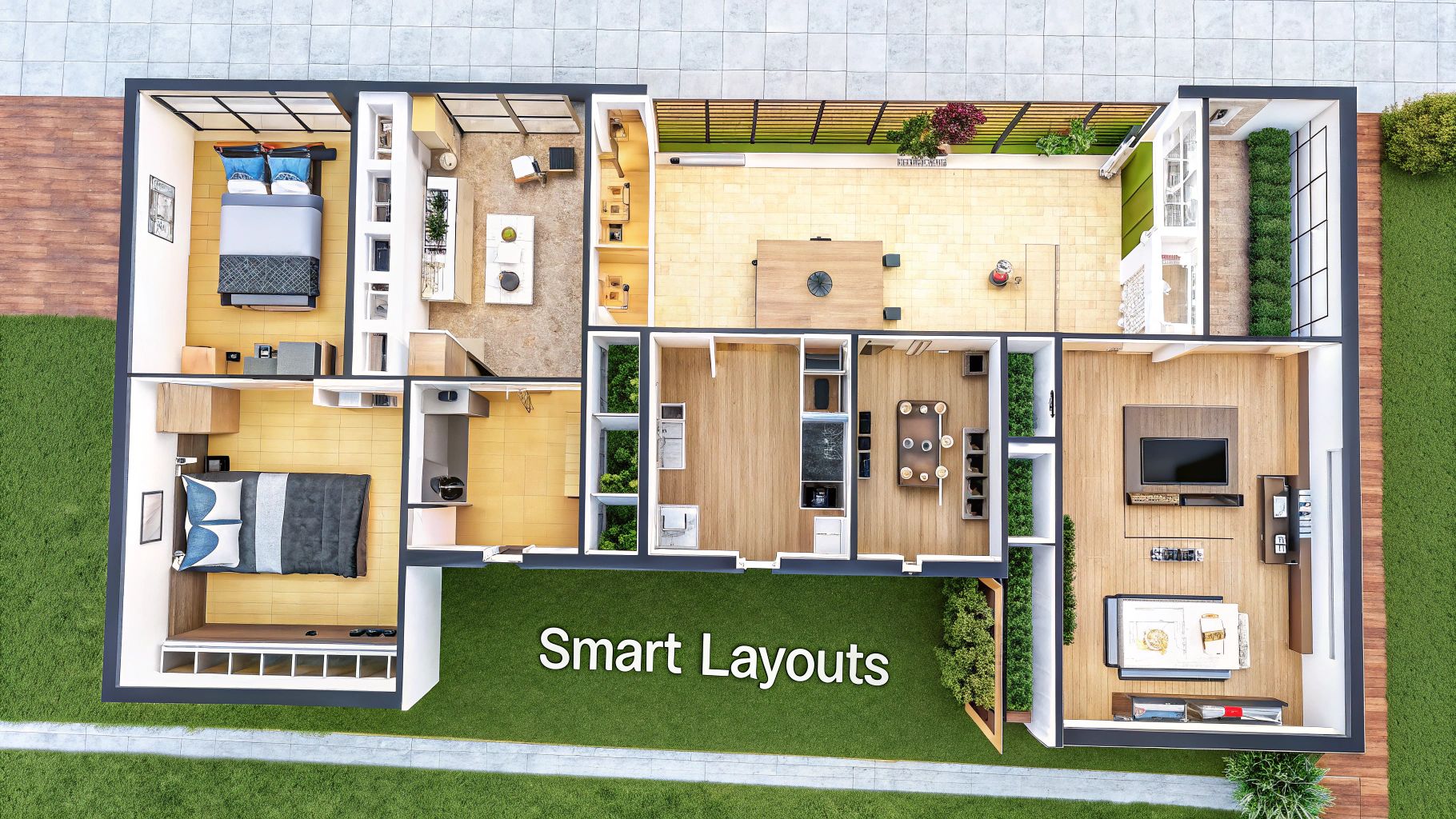
The layout is the absolute backbone of any 3 room resale HDB kitchen design. Get it right, and even the smallest space feels intuitive and spacious. Get it wrong, and you're stuck dodging awkward corners and fighting for elbow room every time you cook. It’s the one decision that will define how you experience your kitchen every single day.
Over the years, we've seen that a few core layouts consistently work best in the typical 9 to 12 square metre kitchens found in these older flats. Each serves a different lifestyle, so picking the right one is about being honest about how you really use your space.
The Ultra-Efficient Galley Kitchen
A galley kitchen, with two parallel counters and a walkway down the middle, is built for maximum efficiency. It’s a real workhorse in a narrow footprint, making it a perfect match for many resale HDB floor plans.
This layout is a masterclass in creating a seamless work triangle. We usually position the sink and hob on one side, with the fridge and key storage opposite. This setup means you can pivot between prepping, cooking, and cleaning with minimal wasted steps.
- Who It's For: The serious home cook who puts function first. If you're often whipping up multi-course meals, the step-saving design of a galley is unbeatable.
- What to Watch For: The central corridor can feel tight. We always advise a minimum width of 1.2 metres between counters to allow comfortable movement and for cabinet doors to open without obstruction.
- Practical Tip: To avoid a "tunnel" effect, use light-coloured cabinetry and ample lighting. Under-cabinet LEDs are essential; they brighten countertops and visually widen the space.
The Versatile L-Shape Kitchen
The L-shaped layout is a popular choice, and for good reason. By arranging cabinets and counters along two adjoining walls, it frees up the rest of the floor. This immediately makes the room feel more open and less confined than a galley kitchen, working wonders in squarer spaces.
Its biggest draw is the generous, unbroken stretch of countertop it creates—perfect for spreading out during meal prep. The open area also leaves room for a small dining table or even a portable island, adding a layer of flexibility that many of our clients love.
We often see the L-shape as the perfect sweet spot between the pure utility of a galley and the social vibe of an open kitchen. It keeps the main work zones tight and efficient while giving you back precious floor space.
The Expansive Open-Concept Kitchen
Hacking down a wall to merge the kitchen with the living area is probably the single most transformative thing you can do in a 3-room flat. An open-concept kitchen doesn’t just feel bigger; it makes the entire home feel bigger, brighter, and more connected.
This setup is ideal for homeowners who love to entertain. The cook is no longer isolated and can chat with guests or keep an eye on the kids. However, this openness brings its own set of challenges.
- Noise and Smells: Everything from the sizzle of the pan to the smell of garlic will drift into your living space. A high-performance, quiet cooker hood is a must. Pay attention to the extraction rate (measured in m³/hr) to ensure it can handle heavy cooking.
- Visual Clutter: Your kitchen is permanently on show. This means keeping countertops tidy becomes a daily discipline. We always design open-concept spaces with tons of clever concealed storage to make it easy to maintain a clean, uncluttered look.
- Creating a Divide: A peninsula or a small island is a fantastic way to create a subtle visual break between the kitchen and living zones. Plus, it gives you extra prep space and a casual spot for breakfast.
Case Study: The Wet and Dry Kitchen Hack
Even in a compact 3-roomer, you can carve out separate ‘wet’ and ‘dry’ kitchen zones. We recently worked with a client who was an avid baker but also did heavy-duty daily cooking. She desperately needed a dedicated spot for her oven and stand mixer that wouldn't get splattered by her wok.
Our solution? We used an L-shaped layout for the 'wet' area, which housed the sink and hob for all the messy stuff. Then, along the opposite wall, we built a shallow, full-height pantry and counter section. This became her ‘dry’ kitchen.
- The Wet Zone: Kept all the plumbing and gas lines consolidated, containing the grease and steam from heavy cooking.
- The Dry Zone: Served as a clean, dedicated hub for her built-in oven, coffee machine, and stand mixer, with deep drawers below for all her baking supplies.
This clever division meant the two workflows never clashed, effectively giving her two specialized zones within one small room.
Choosing the right layout really boils down to how you live your life. When you match the kitchen’s fundamental design to your daily habits, you end up with a space that’s not just beautiful, but a true joy to use.
The Power of Custom Carpentry and Storage
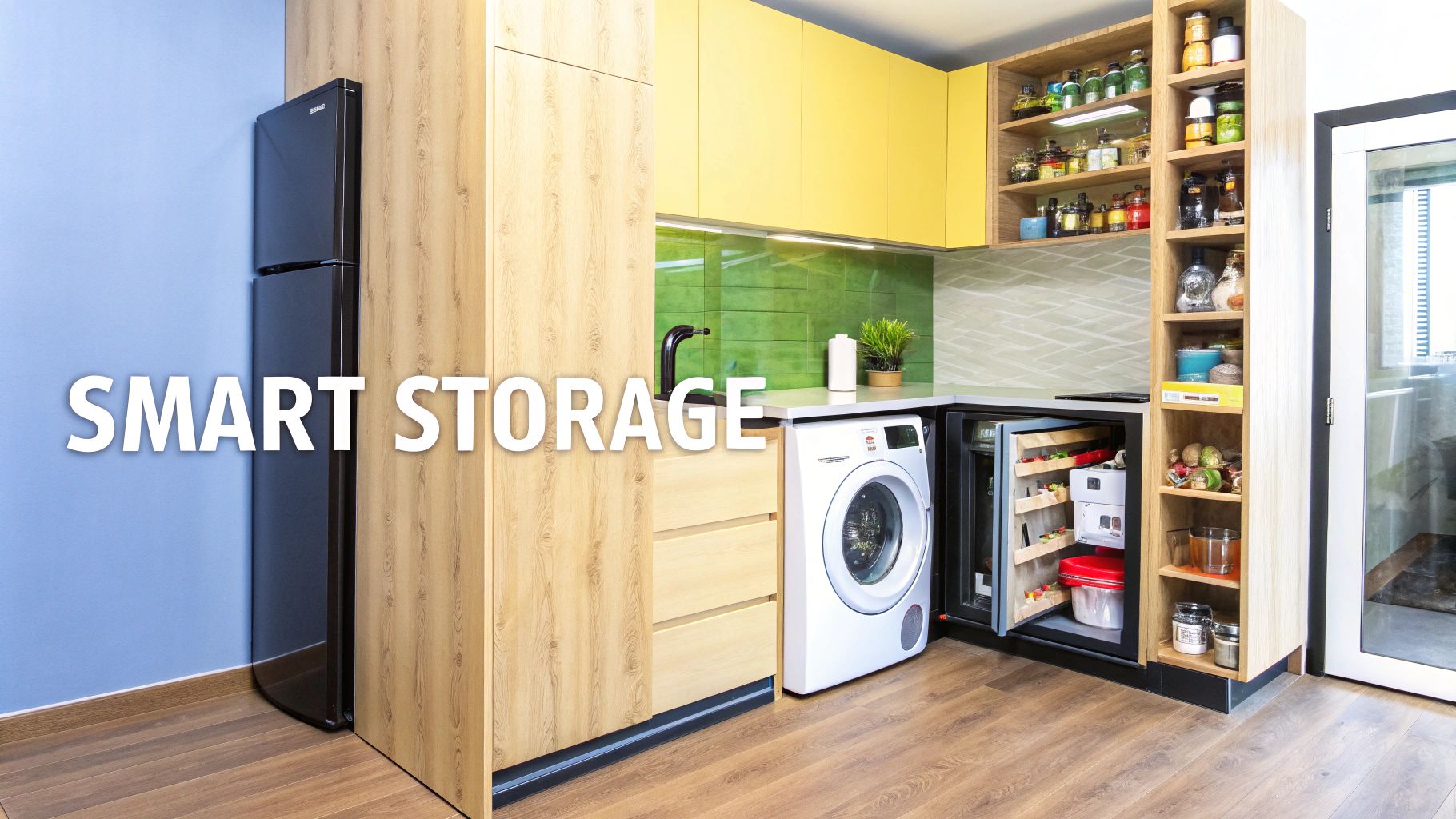
When you’re working with a 3 room resale HDB kitchen, off-the-shelf cabinets are a false economy. They’re built for generic spaces, but your kitchen is anything but. This is where custom carpentry becomes your secret weapon, turning awkward nooks and wasted vertical space into hardworking storage.
Think about it: standard cabinets almost always leave that frustrating gap below the ceiling. It’s a magnet for dust and a total waste of prime real estate. Custom carpentry lets us build right up to the ceiling, instantly giving you 15-20% more storage volume. It also creates a seamless, built-in look that makes the whole kitchen feel more intentional and polished.
But the real magic isn’t just about going taller; it’s about what happens inside. We move beyond simple shelves to engineer storage that brings everything to you, instead of forcing you to dig into deep, dark cupboards where things get lost.
Going Beyond Standard Cabinets
To truly squeeze every last bit of function out of your kitchen, we rely on specialised hardware and clever mechanisms. These aren’t just nice add-ons; they are core components of an intelligent kitchen design that solves real-world problems.
Here are a few client favourites that we find ourselves recommending again and again:
- Full-Height Pantries: These slim but mighty units can hold everything from your sauces and dry goods to smaller appliances, keeping your main countertops beautifully clear. A well-designed pantry acts as the command centre for your kitchen's inventory.
- Corner Pull-Out Systems: Those awkward corner cabinets are notorious black holes. We fix this by installing systems like a LeMans unit or a magic corner. The shelves swing right out, presenting all their contents so you never have to blindly rummage for a pot again.
- Integrated Spice Racks: A narrow, pull-out spice rack right next to the hob is an absolute game-changer. It turns a tiny, otherwise unusable sliver of space into a highly functional feature, keeping your seasonings organised and right where you need them.
A thoughtfully designed kitchen isn't just about how it looks; it's about how it feels to use. When storage is intuitive and everything has a dedicated home, the daily act of cooking becomes a pleasure, not a chore.
Creating a Clean and Uncluttered Look
Custom carpentry also excels at concealment. In many 3-room HDBs, the washing machine ends up in the kitchen. Instead of letting it break the visual flow, we can build custom cabinetry to hide it completely. A seamless cabinet door makes it disappear, creating a clean, uninterrupted line.
This same principle applies to microwaves, dishwashers, and even the rubbish bin. By integrating them neatly into the cabinetry, we achieve a streamlined aesthetic that makes the entire space feel calmer and more organised. This is especially vital in open-concept kitchens that are always on display.
The quality is also in the details you can feel. Features like soft-close hardware for all doors and drawers are no longer a luxury—they’re an expectation. They prevent slamming, reduce wear and tear, and add a touch of quiet refinement to your daily routine. Likewise, choosing high-quality, durable laminates is crucial to ensure your investment stands up to the rigours of daily use in Singapore’s humid climate.
Ultimately, investing in smart custom carpentry is one of the most effective ways to boost your property's appeal and value. In Singapore's competitive HDB resale market, a beautifully renovated kitchen is a huge selling point, and clever storage is a key part of that. Homes with modern, optimised kitchens often command higher resale prices. To get a clearer picture of potential costs and returns, it's worth taking time to learn more about HDB renovation budgeting.
Selecting Materials That Endure and Impress
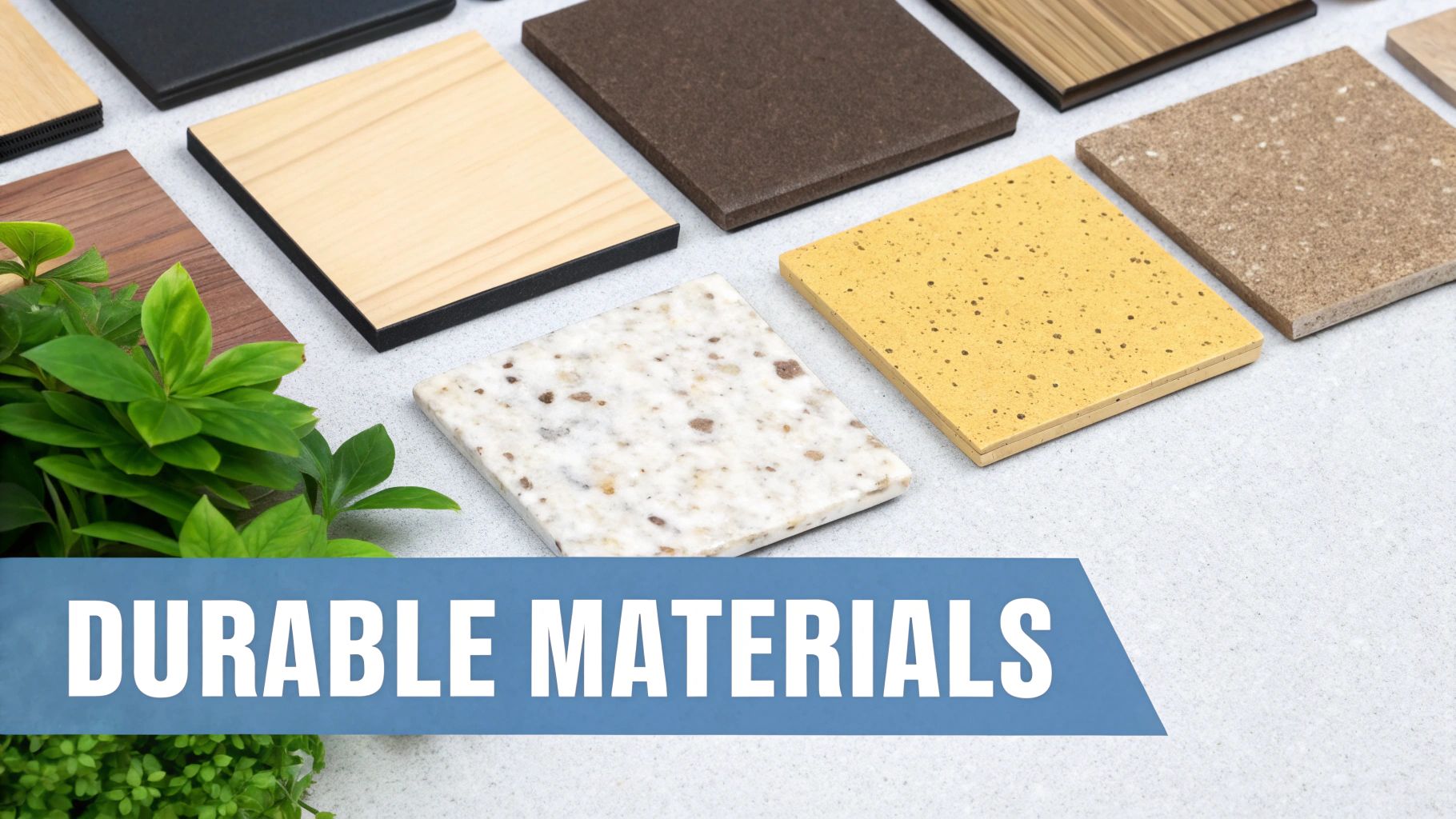
The materials you pick for your 3 room resale HDB kitchen design aren’t just about looks; they're a long-term investment. These surfaces will take a daily beating from heat, moisture, and spills, especially in our humid Singapore climate. Getting this right means your kitchen won’t just look incredible on day one—it will stay that way for years.
Think of your countertop as the engine of your kitchen. It's where all the action happens, from chopping veggies to resting hot pans, so durability is non-negotiable. We always steer clients towards materials that beautifully balance aesthetics with sheer resilience.
High-Performance Countertops
Choosing the right countertop comes down to balancing its look, how you’ll maintain it, and what you’re willing to spend. Based on our experience and what clients consistently love, a few clear winners have emerged.
- Quartz: This is our go-to recommendation. As an engineered stone, it’s non-porous, which is a game-changer against stains from coffee, wine, or the dreaded curry. It needs practically zero maintenance (no sealing required!) and comes in a massive range of colours and patterns.
- Sintered Stone: A level up in toughness, sintered stone is incredibly hard-wearing. It's forged under intense heat and pressure, making it resistant to just about everything: scratches, heat, and even UV rays, so it won’t fade. Brands like Dekton or Neolith are great examples.
- KompacPlus: Famous for its sleek, ultra-slim profile (around 6mm), KompacPlus is a high-pressure laminate that's totally waterproof and surprisingly durable. It’s perfect for that clean, modern aesthetic and is often used for both countertops and backsplashes for a seamless, unified look.
The right countertop simplifies your life. Investing in a non-porous and scratch-resistant surface like quartz or sintered stone means less time worrying about maintenance and more time enjoying your kitchen.
Cabinetry Finishes That Last
While your cabinet fronts set the kitchen's visual tone, it's the finish that dictates how well they stand up to wear and tear. For HDB kitchens, laminates are the undisputed champion because they are tough, easy to clean, and come in countless designs.
We almost always specify high-pressure laminates (HPL) for cabinetry. They offer far better resistance to impact and heat than standard options. Here's a pro tip: for high-traffic spots like lower cabinets or the doors under the sink, choose laminates with anti-fingerprint or scratch-resistant properties. These advanced finishes are a small upgrade that keeps your kitchen looking fresh with minimal effort.
Practical Flooring and Backsplashes
For kitchen floors, it’s all about water resistance and durability. Vinyl flooring is a huge favourite for its waterproof qualities, comfort underfoot, and the endless variety of wood and stone effects. That said, porcelain tiles are a classic for a reason—they are extremely tough and a breeze to clean.
Your backsplash needs to be, above all, easy to wipe down. A tempered glass backsplash gives you a smooth, modern look with no grout lines to scrub. If you prefer a bit more texture, use larger tiles to minimise grout lines, or go for a continuous slab of the same material as your countertop for a truly cohesive and high-end finish.
Getting a Grip on Your Renovation Timeline and Budget
So, you’re ready to dive into a 3 room resale HDB kitchen design project. This is the exciting part! But before you get lost in tile samples and countertop finishes, let's talk about the two things that will make or break your renovation: time and money.
Getting a realistic handle on the project flow and the costs involved is the best way to keep things running smoothly. It helps you plan with confidence and dodge those classic renovation nightmares, like surprise delays and budgets that blow out halfway through.
A full kitchen overhaul, especially in a resale flat, isn't just a quick weekend job. It's a carefully choreographed dance involving multiple skilled tradespeople who need to work in a very specific order. It all begins with planning and permits, gets messy with demolition, and then is methodically built back up piece by piece.
Mapping Out the Key Phases
A successful renovation follows a logical sequence. Each step lays the groundwork for the next, and trying to rush or skip a phase is a recipe for headaches later on. Trust me, you don't want your plumber trying to lay pipes after the cabinets are in.
Here’s a snapshot of how a typical project unfolds:
- Hacking and Demolition: This is where the magic begins (and the dust flies!). Old flooring, wall tiles, and cabinets are stripped out to give you a blank canvas.
- Masonry and Wet Works: If you’re shifting walls, this is when it happens. Then comes the crucial work of levelling the floor with screed and applying waterproofing to prevent any future leaks.
- Plumbing and Electrical: This is the "behind-the-scenes" work. Pipes for your sink and appliances are run, and all the wiring for lights, switches, and power points is put in place. This has to happen before any of the pretty stuff goes on.
- Finishing Touches: Now the space starts to look like a kitchen again. This phase includes plastering the walls smooth, tiling, and getting the first coat of paint on.
- Carpentry and Countertop Installation: The custom-built cabinets finally arrive and are installed. Once they're in, a precise measurement is taken for your countertop, which is then fabricated and fitted.
For a 3-room resale HDB kitchen, you should generally set aside 8 to 10 weeks for the entire process. The age of the flat is a big factor here; if you're working with a pre-2000s build, expect to lean closer to the 10-week mark. Older flats often need more extensive rewiring and plumbing updates to meet current standards. For a deeper dive, check out some great insights on how kitchen renovation timelines are calculated on vistyle.sg.
Understanding the Cost Breakdown
The final bill for your kitchen reno will depend entirely on how ambitious you are. A simple cosmetic refresh is a world away from a complete gut-and-rebuild in terms of cost.
The main things that will influence your budget are:
- Extent of Hacking: The more you tear down, the more you'll pay for labour and hauling away the debris.
- Material Choices: This is a big one. Opting for premium materials like sintered stone countertops or imported European tiles will naturally cost more than sticking with standard quartz and ceramic options.
- Carpentry Complexity: A straightforward set of cabinets will be much easier on the wallet than a design packed with clever pull-out systems, custom dividers, and high-end hardware.
- Appliances and Fittings: The brands you choose for your hob, hood, sink, and tap can swing your budget significantly. A high-end European brand will have a very different price tag than a reliable budget-friendly one.
Your Top Questions About 3-Room HDB Kitchen Design
When we sit down with homeowners looking to start their 3-room resale HDB kitchen design, the same handful of questions always pop up. Getting these sorted out early on is the key to moving forward with a plan that truly fits your life, your flat, and your finances.
Is an Open-Concept Kitchen a Good Idea?
For a compact flat, it can be a game-changer. Knocking down a wall immediately makes the entire living area feel bigger, brighter, and more connected. It’s a fantastic option if you love that airy, modern feel.
But it’s not without its challenges. You absolutely need a powerful cooker hood to keep cooking smells from wafting into your living room. Aesthetically, the kitchen can't just be a kitchen anymore; its design has to flow seamlessly with your living and dining spaces. We often use a peninsula counter or a small island to create a subtle visual separation without sacrificing that open feeling.
Where Should I Spend My Money for the Best Value?
This is a big one. It's tempting to splurge on flashy finishes, but I always advise clients to prioritise the hardworking elements that you touch and use every single day.
- Custom Carpentry: This is the absolute backbone of your kitchen. Investing in quality cabinetry with reliable hardware (think Blum or Hafele hinges and runners) will pay off for years to come.
- A Solid Countertop: You need a surface that can handle daily abuse. Quartz and sintered stone are brilliant choices because they’re incredibly durable and low-maintenance.
- Core Appliances: Your hob, hood, and fridge are non-negotiable workhorses. Don't skimp here.
You can always save on things like decorative backsplash tiles or fancy pendant lights. Those are easier and cheaper to upgrade down the road when you have a bit more budget. To get a better handle on your finances, it helps to plan a budget-friendly kitchen remodeling project from the very beginning.
By focusing your funds on the functional core of the kitchen, you’re investing in longevity and daily usability. That’s where the real value lies.
How Can I Make My Small Kitchen Feel Bigger?
We have a few proven tricks up our sleeves for this. First, colour is your best friend. Light-coloured cabinets and walls are a must, as they reflect light and create an illusion of space. Opting for glossy or satin finishes on your carpentry helps bounce even more light around the room.
Good lighting is just as crucial. A layered approach—mixing general ceiling lights with targeted under-cabinet LEDs—gets rid of gloomy corners and adds a sense of depth.
Finally, nothing makes a space feel smaller than clutter. Smart storage is the solution. Think integrated appliances that hide behind cabinet doors and clever pull-out pantries that use every inch of space. Keeping your countertops clear is the fastest way to make the entire kitchen feel instantly larger.
At KIVO, we specialise in transforming compact HDB kitchens into beautiful, highly functional spaces that punch well above their weight. If you're ready to see what's possible for your home with thoughtful design and expert craftsmanship, explore our services at https://kivo.com.sg.