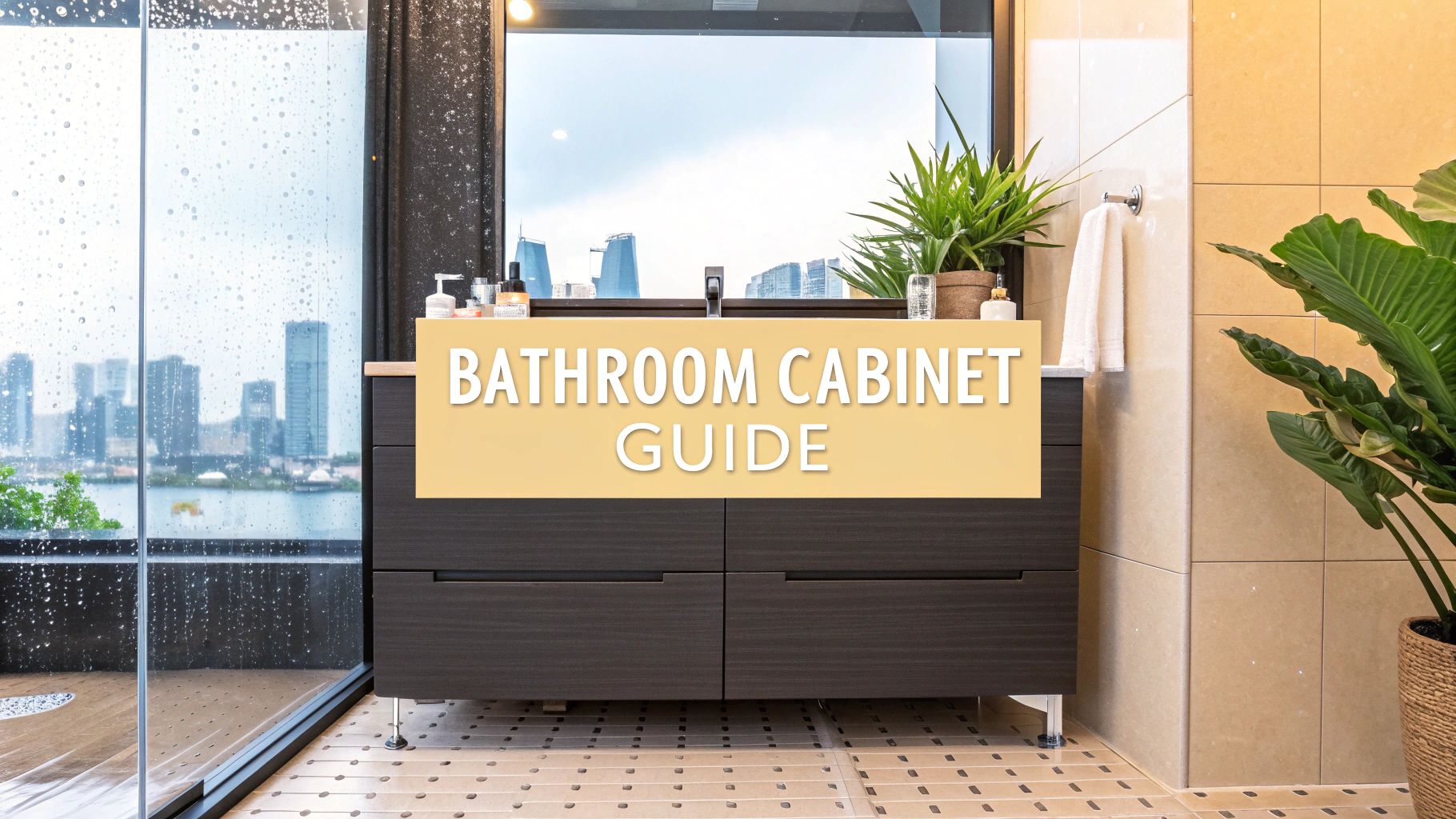
Choosing the right bathroom cabinet in Singapore isn't just about looks; it's a strategic decision driven by our humid climate and compact HDB or condo layouts. The goal is always to maximise storage without making the room feel cramped, creating a functional space that stands the test of time. It's a balance between fighting off moisture, making every centimetre count, and designing a space that improves your daily routine.
Your Guide to Bathroom Cabinets in Singapore
Picking a bathroom cabinet in Singapore goes beyond finding a style on Pinterest. This is a core decision that shapes your bathroom's practicality and durability, especially where space is a premium. A good cabinet isn't just a pretty face; it’s a workhorse providing vital storage to create a calm, organised retreat.
From our experience with countless local projects, the most successful outcomes happen when homeowners focus on the practical fundamentals from day one. A well-chosen cabinet should be a problem-solver, anchoring your bathroom design. It needs to stand up to daily steam and splashes, fit a tight layout without feeling clumsy, and hold everything your family needs.
Key Decisions for Your Bathroom Renovation
Before getting lost in materials and costs, let's nail down the basics. Getting these foundational choices right paves the way for a smooth project.
- Space and Layout: How will the cabinet fit? Consider door swings, walking space, and its position relative to the toilet and shower. For a recent project in a Tampines BTO, we used painter's tape to mark the cabinet's footprint on the floor so the client could physically walk around it and feel the clearance before committing.
- Storage Needs: What are you storing? Tall shampoo bottles, small cosmetic jars, or bulky towels? Your answer determines if you need deep drawers, shallow shelves, or a combination. List your daily items to create a storage "map."
- Mounting Style: Will it be a floor-standing unit or a wall-mounted (floating) vanity? Floating cabinets are a favourite in Singapore because they create an illusion of space and make mopping the floor much easier.
- User Height and Accessibility: The cabinet must be at a comfortable height for daily use. This small detail makes a massive difference in how pleasant the space is to use.
The trend towards smaller, modern homes has shaped cabinet design. We've seen a massive preference for single-door bathroom cabinets, which recently held a dominant 56.9% market share because they are perfect for tight layouts. This reflects a practical desire for storage that works hard without compromising on style. You can discover more insights about bathroom cabinet trends to see how the market is evolving.
Selecting Materials That Defeat Singapore's Humidity
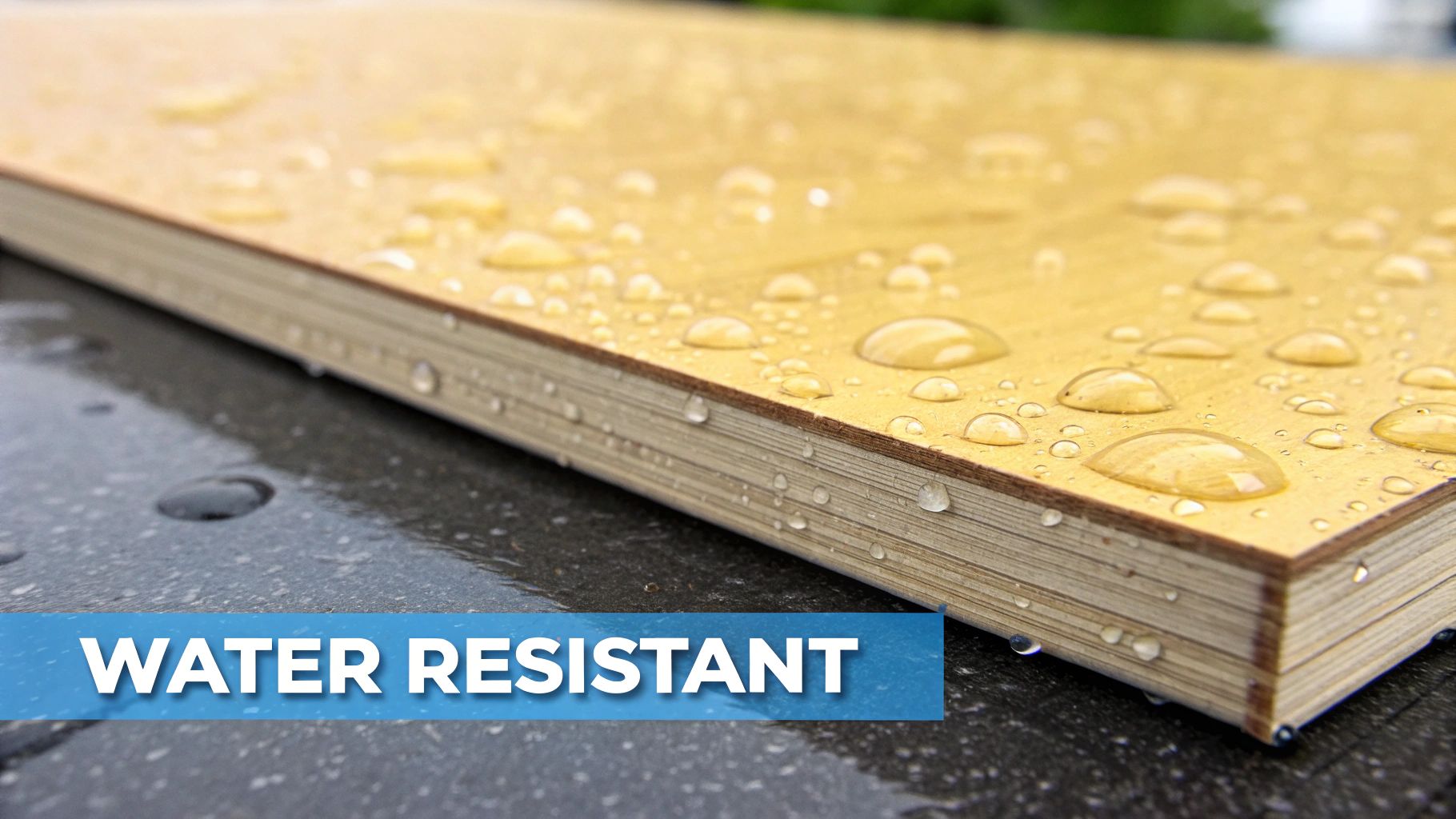
In Singapore, material selection is the single most important decision for your cabinet's lifespan. Our year-round humidity is a destructive force that relentlessly attacks unsuitable materials. Make the wrong choice, and you could face swollen panels, peeling finishes, and mould in less than a year.
Think of your cabinet's core material like a house's foundation. If it’s weak, everything built on it is doomed. This is why our custom cabinets are built almost exclusively on a rock-solid foundation of solid plywood. Plywood's cross-grain construction provides incredible structural stability and high resistance to warping and moisture damage, especially when compared to other common engineered woods.
The Plywood Advantage Over Common Alternatives
Many off-the-shelf cabinets in Singapore are built with Medium-Density Fibreboard (MDF) or particleboard cores. While the price tag is appealing, these materials are not cut out for the constant dampness of a bathroom.
- Medium-Density Fibreboard (MDF): Made from wood fibres, wax, and resin, MDF acts like a sponge when it meets moisture. Once water gets past the surface, the material swells and loses its strength. It’s a poor long-term investment for any wet area.
- Particleboard: Even more vulnerable, particleboard is essentially compressed wood chips and sawdust. The moment water gets in, it expands and crumbles, which is often why you see cabinet doors falling off their hinges.
From experience, homeowners who opt for MDF or particleboard to save money often face replacement costs within three to five years. In contrast, a well-made plywood cabinet can easily last for a decade or more with basic care, making it the smarter, more economical choice over time.
Of course, choosing the right material is only half the battle. Using tips for reducing home humidity will help create a healthier environment for your cabinet and home.
To help you visualise the differences, here's a quick comparison of how common materials stack up in our climate.
How Bathroom Cabinet Materials Perform in a Humid Climate
| Material | Water Resistance | Durability | Aesthetic Options | Estimated Cost |
|---|---|---|---|---|
| Plywood | Good to Excellent (with proper finishing) | Very High | Wide range with laminate or veneer finishes | Moderate |
| MDF | Poor | Low | Good, smooth surface for paint | Low |
| Particleboard | Very Poor | Very Low | Limited, often with melamine finish | Very Low |
| Aluminium | Excellent | Excellent | Modern, sleek, various colours | High |
| Stainless Steel | Excellent | Excellent | Industrial, professional look | High |
While MDF and particleboard are cheaper upfront, their poor performance in wet conditions makes them a risky choice for any bathroom in Singapore.
Modern Materials For Ultimate Durability
While plywood is our trusted workhorse, some clients now request materials that are completely immune to water, especially for a sleek, contemporary aesthetic.
Aluminium: It's lightweight, completely rust-proof, and totally waterproof, making it an amazing material for a bathroom cabinet in Singapore. Aluminium won't warp or swell, no matter how humid it gets. Modern finishes offer a huge range of colours and textures.
Stainless Steel: Known for its hygienic qualities and toughness, stainless steel brings a professional, high-end feel to a bathroom. It’s impervious to water and easy to clean, though you’ll want to wipe it regularly to keep water spots and fingerprints at bay.
The Finishing Touch: Protection and Style
The core material gives you strength, but it’s the finish that provides the first line of defence against moisture while defining your cabinet’s look.
A high-pressure laminate (HPL) is the most practical and durable finish for a plywood cabinet. Laminates are made by fusing multiple layers of paper with resin under intense heat and pressure, creating a hard, non-porous surface that seals the plywood core from steam and splashes.
The best part? Laminates are available in a massive array of designs, from realistic wood grains and stone textures to solid matte or glossy colours. This gives you the freedom to achieve any look you want without compromising on resilience—the perfect blend of style and substance for Singapore's demanding climate.
Custom vs Off-the-Shelf Bathroom Cabinets
This is a major decision for any bathroom renovation: custom-built or ready-made? Your choice affects the final look, budget, timeline, and how well the cabinet actually works in your bathroom. Both paths have their perks, but the right answer depends on your priorities and the unique quirks of your space.
Ready-made cabinets from big box stores offer instant gratification and are almost always cheaper upfront, a huge draw for tight budgets or fast timelines. But that convenience comes with trade-offs. Standard sizes don’t play well with the odd nooks common in HDB flats and condos, leading to awkward gaps and wasted space. More worrying is what they're made of; many are built with MDF or particleboard that can’t handle our humidity long-term.
The Power of a Perfect Fit with Custom Carpentry
This is where design truly meets function. Custom carpentry creates something made for your space. It stops being just a storage box and becomes an integrated feature that makes the most of every millimetre.
For example, we recently helped a BTO owner in Punggol who had an exceptionally narrow master bathroom. Any off-the-shelf vanity would have either jutted out into the walkway or been too tiny to be useful. Our fix was a custom-designed floating vanity, built to the exact measurements required.
- Maximised Space: We designed it to be slightly shallower than standard but wider, running from wall to wall. No wasted centimetre.
- Tailored Storage: The inside was mapped out with specific compartments for the couple’s tall skincare bottles and smaller drawers for cosmetics, killing the clutter.
- Material Assurance: We used a moisture-resistant plywood core and finished it with a high-quality laminate, guaranteeing it would survive years of steamy showers.
The result was a cabinet that felt like it was always meant to be there, making the small bathroom feel far more open and organised.
When an Off-the-Shelf Unit Makes Sense
While custom work has clear advantages, it isn’t the only way. On a recent condo renovation, our client found a high-end modular unit from a European brand that was a great fit for their bathroom's layout. Because their space was conventional and their budget could stretch to a premium brand known for quality materials, it was a practical and stylish choice.
This approach works best when:
- Your bathroom dimensions are fairly standard.
- You find a reputable brand that uses durable, water-resistant materials.
- The pre-set storage options happen to line up with your needs.
Choosing a bathroom cabinet is an investment in your home's daily function. The decision between custom and off-the-shelf is a balance between a perfect fit and immediate availability, between long-term durability and upfront cost.
Homeowners are looking for better solutions. Singapore's cabinet market is seeing strong growth, with a notable import growth rate of 9.31% from 2023 to 2024. This shows a growing appetite to invest in higher quality storage. You can read the full research about Singapore's cabinet market trends to get a better sense of the market.
Ultimately, a custom bathroom cabinet in Singapore gives you total control to solve your specific problems, while a ready-made one offers speed and simplicity.
Planning Layouts for HDB and Condo Bathrooms
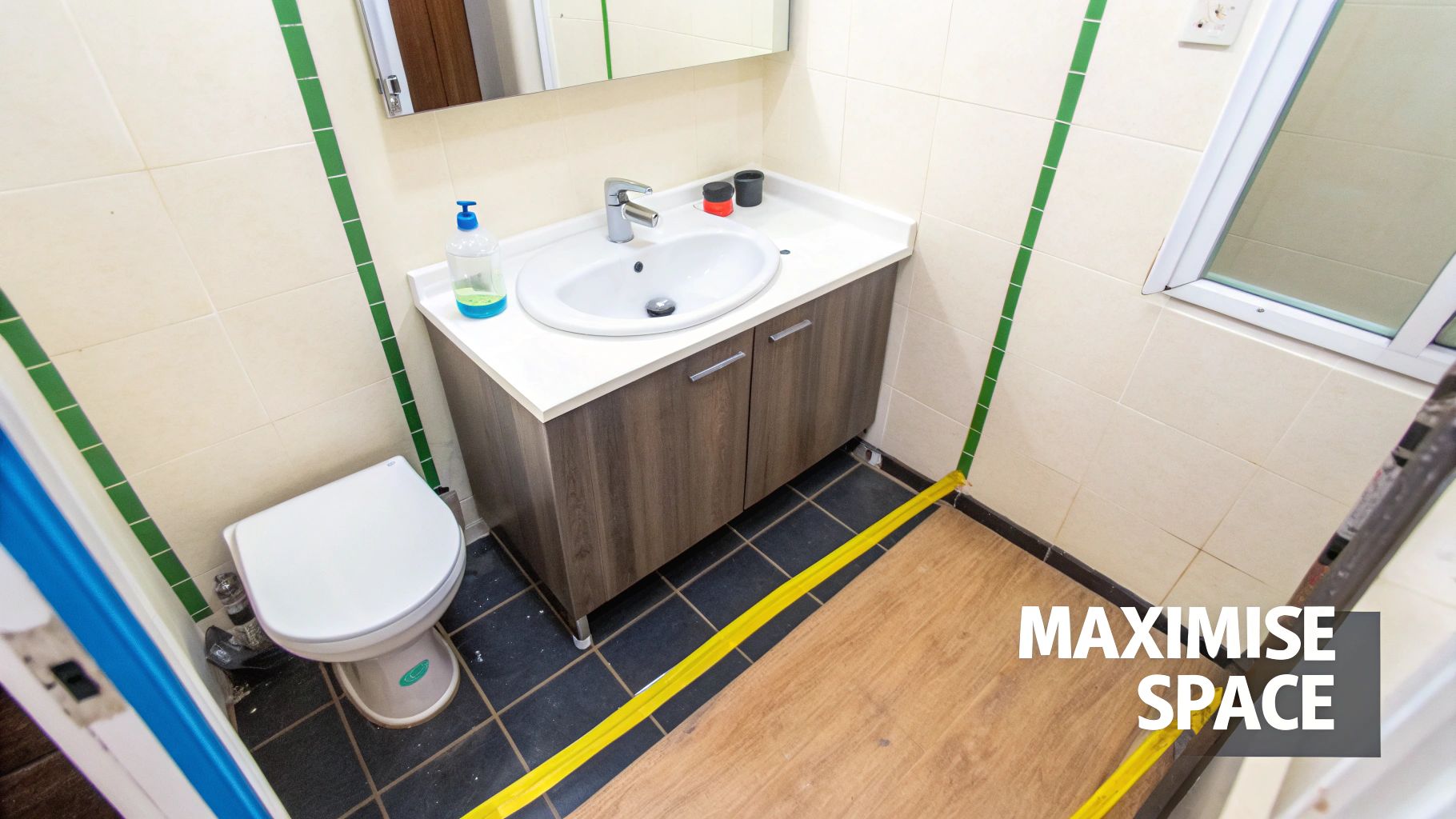
Anyone living in a Singaporean HDB or condo knows the bathroom isn't palatial. This is where smart layout planning becomes crucial. The right layout makes a tiny space feel surprisingly open and efficient; the wrong one is a source of daily frustration. It's all about making your new bathroom cabinet work with the room's flow, not against it.
Before installation, getting a handle on a few key measurements is non-negotiable. These are the numbers we use on our projects to guarantee a bathroom that’s comfortable and usable.
A simple trick we tell our clients: grab some painter's tape. Mark out the exact footprint of your proposed cabinet on the floor and its height on the wall. This helps you physically see the space it will command and get a genuine feel for clearances before you commit.
Essential Clearances and Mounting Heights
Getting the numbers right separates a comfortable bathroom from a cramped one. These are our standards for good design practice.
- Door Swing Clearance: Ensure bathroom and shower doors can swing fully open without hitting the cabinet. You’ll want at least 90 cm of clear walking space in front of the cabinet.
- Toilet Proximity: Allow a minimum of 40 cm of space from the centre line of the toilet to the side of your cabinet to prevent a squashed-in feeling.
- Standard Mounting Height: For most adults, the ideal vanity countertop height is between 85 cm to 90 cm from the finished floor for ergonomic comfort.
- Mirror Placement: Hang your mirror or mirror cabinet so the bottom edge is about 15 cm to 25 cm above the vanity countertop to create a balanced look and keep it clear of splashes.
Planning is more than just fitting things in; it's about choreographing movement. A well-planned bathroom layout feels intuitive. You shouldn't have to squeeze past your vanity or find the cabinet door blocked by the toilet.
These guidelines are a starting point. Your family’s specific heights or accessibility needs might call for tweaks—a key advantage of going custom.
Popular Layouts for Small Spaces
Over the years, a few layouts have consistently delivered great results in space-starved Singaporean bathrooms. They’re brilliant at maximising storage while making the room feel bigger.
Floating Vanities for an Open Feel
Wall-mounted or "floating" vanities are a game-changer for small bathrooms. Lifting the cabinet off the floor creates an unbroken line of sight, tricking the eye into perceiving a larger, airier room. Plus, cleaning the floor underneath is a breeze.
Recessed Mirror Cabinets for Zero-Footprint Storage
When every centimetre counts, building storage into the wall is the ultimate space-saving hack. A recessed mirror cabinet sits flush within the wall cavity, giving you deep, hidden storage for toiletries without jutting into the room. It’s a sleek, minimalist choice that holds a surprising amount.
Tall Linen Towers to Maximise Vertical Space
Don’t forget to look up. In a narrow bathroom, a tall, slim cabinet (often called a linen tower) can solve storage woes. Tucked next to the vanity or in an unused corner, it draws the eye upward, making clever use of vertical real estate.
Understanding Costs and Hiring the Right Professional
Let's talk money. Setting a realistic budget is the first step in any bathroom renovation. When it comes to your bathroom cabinet in Singapore, the final price tag is a mix of a few key factors.
The biggest decision is between a ready-made unit and a custom-built one. Off-the-shelf cabinets usually fall between $200 and $800. Custom cabinets, which we specialise in, generally start from around $800 and can go up to $2,500+ for a standard vanity. That higher price reflects better materials, a perfect fit for your space, and professional craftsmanship that stands up to Singapore's humidity year after year.
Decoding Your Quote
Why does a custom cabinet cost more? The final cost is the sum of its parts, reflecting quality and design complexity. Here’s what’s driving the numbers:
- Material Choice: A moisture-resistant plywood core with a high-pressure laminate finish will cost more than a basic MDF one. Premium materials like aluminium or stainless steel will push the price higher.
- Size and Complexity: A simple, single-door floating vanity is more affordable than a large, double-sink unit with custom drawer dividers. More material and labour mean higher cost.
- Hardware and Finishes: Details matter. Soft-closing hinges, designer handles, and premium countertops like sintered stone add to the price but also elevate the cabinet's look and daily function.
The demand for high-quality bathroom furnishings in Singapore is growing. In November 2023, the premium German brand Duravit AG opened its first direct-to-consumer flagship store here. This move reflects a rising appetite for luxury, made-to-measure bathroom solutions. You can learn more about the residential bathroom cabinets market to get a feel for these trends.
Finding the Right Professional for the Job
Your cabinet is only as good as the person who builds and installs it. A beautiful design can fall apart with poor execution, especially with waterproofing and installation. A true professional doesn’t just build a box; they solve problems. They know how to seal edges, securely mount a heavy cabinet to an HDB wall, and integrate plumbing without leaks.
The right professional partnership is built on trust and transparency. You should feel confident your vision is understood and the final product will be a testament to quality craftsmanship.
To help you hire with confidence, here is a checklist of must-ask questions.
Checklist for Vetting Your Professional:
- Can I see your portfolio? Ask for examples of similar bathroom cabinet projects. Look closely at the details. Are the joints clean? Is the alignment perfect?
- What materials do you recommend and why? They should confidently explain why they favour materials like plywood for our climate and steer you away from MDF.
- What does your quotation include? Get an itemised quote in writing. Clarify if the price covers the cabinet, countertop, sink, tap, installation, plumbing, and GST to avoid surprise costs.
- What are your waterproofing methods? Ask them to explain how they seal the cabinet, particularly around the sink cutout and where it meets the wall.
- What is the estimated timeline? A clear schedule for fabrication and installation is essential for planning.
Asking these direct questions helps gauge their expertise and ensures everyone is on the same page, leading to a bathroom cabinet in Singapore that is truly built to last.
Essential Maintenance for Your Bathroom Cabinet
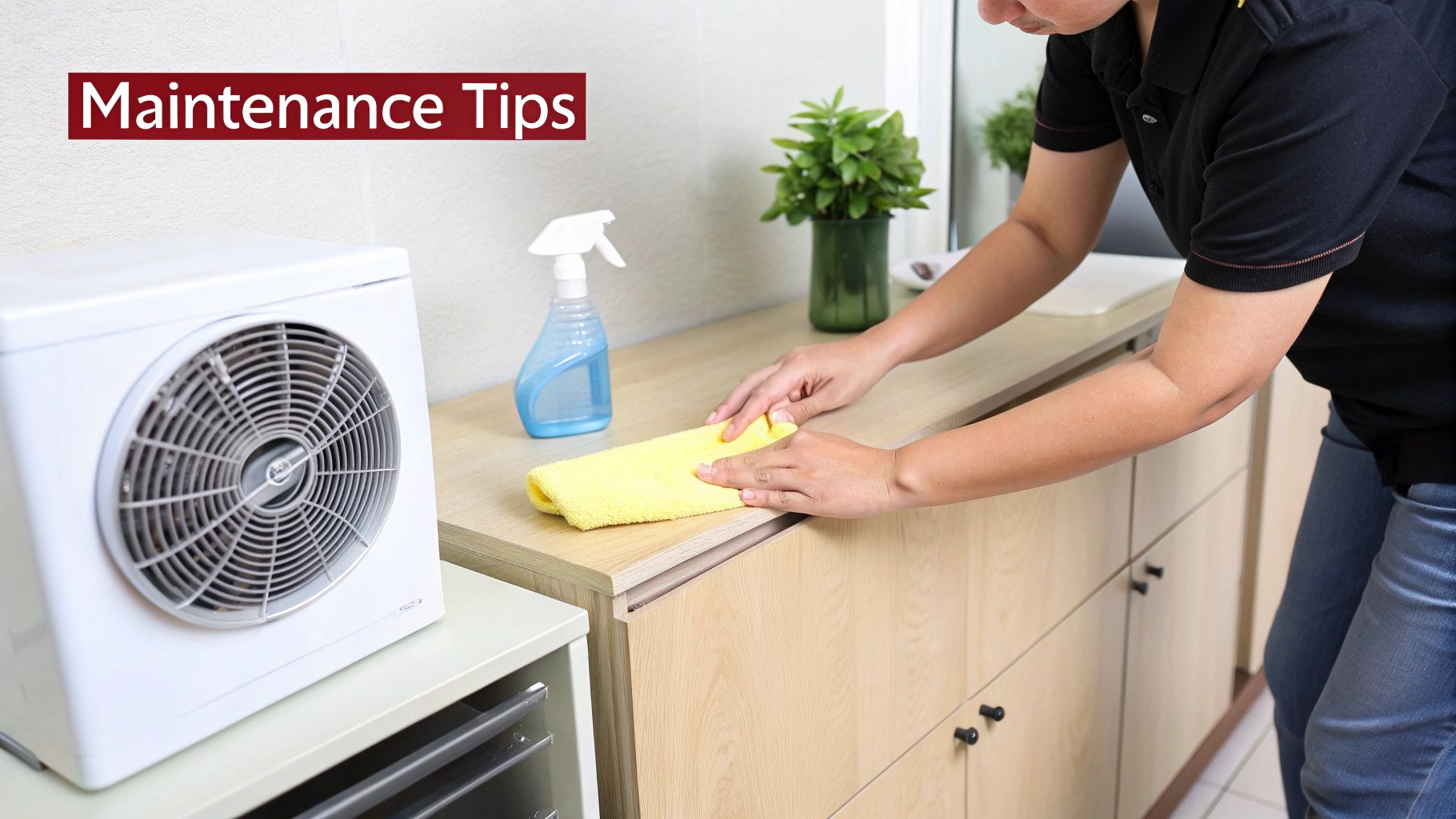
A well-made bathroom cabinet is an investment. To ensure it lasts, a little care goes a long way. In Singapore, routine maintenance is a must-do to fend off moisture damage and keep your cabinet looking sharp. The good news is, it doesn’t take much.
The goal is to weave these simple tasks into your regular cleaning schedule until they become second nature.
Cleaning Techniques for Common Materials
How you clean your cabinet depends on what it’s made of. Using the wrong products can cause irreversible damage.
- Laminate Surfaces: This finish is tough for a reason. A quick wipe with a soft, damp microfibre cloth is usually all it takes. For stubborn spots like dried toothpaste, a mild, non-abrasive cleaner will work.
- Natural Wood Veneers: Wood requires more finesse. Always wipe gently in the direction of the grain with a slightly damp cloth and dry it immediately with another soft cloth to prevent water from seeping in.
- Aluminium or Stainless Steel: These materials are magnets for fingerprints and water spots. A microfibre cloth with gentle glass cleaner or a dedicated stainless steel spray will restore their shine without scratching the surface.
The Golden Rule: Wipe up splashes the moment you see them. Water, soap, or facial cleanser—cleaning it up right away stops moisture from working its way into the finish, which is the number one enemy of a long-lasting cabinet.
Tackling Common Issues Head-On
Beyond regular cleaning, keep an eye out for issues that can crop up in our humid climate. Catching them early prevents small problems from becoming expensive headaches. Mould is a frequent visitor; a detailed guide to tackling bathroom mold problems offers professional advice on handling it safely.
Here are a few other common things to watch for:
- Adjusting Misaligned Hinges: If a cabinet door hangs crookedly, it’s usually a simple fix. Most modern hinges have small adjustment screws. A few careful turns with a screwdriver can get things perfectly aligned again.
- Preventing Water Damage: The spots where your cabinet meets the wall or countertop are most vulnerable. Check the silicone sealant in these areas periodically. If it's cracking or peeling, scrape it off and apply a fresh bead to maintain a waterproof barrier.
- Improving Ventilation: The best defence is a good offence. Run your bathroom’s exhaust fan during and for at least 15-20 minutes after every hot shower. This simple action pulls a huge amount of moisture out of the air, protecting your cabinet and everything else.
Your Bathroom Cabinet Questions, Answered
Over the years, we've heard just about every question regarding bathroom renovations in Singapore. Here are straightforward answers to the most common queries, based on our hands-on experience.
What Is the Best Material for a Humid HDB Bathroom?
For the relentless humidity in a typical Singapore bathroom, we almost always recommend a solid plywood core finished with a high-quality laminate. Materials like MDF or particleboard can't handle the moisture—they swell and warp. Plywood is a much tougher contender. The laminate finish then acts as a durable, waterproof shield. If your budget allows, aluminium is a fantastic premium alternative. It's completely waterproof, offers a sleek, modern look, and gives total peace of mind against water damage.
How Much Should I Budget for a Custom Cabinet?
The honest answer is: it varies. The cost hinges on size, materials, and design complexity. As a realistic starting point, a custom-made floating vanity for a standard HDB bathroom typically falls between SGD $800 to $2,500+. It's vital to know what that price covers. This figure usually includes fabrication and installation of the cabinet itself. Always ask for an itemised quote that clarifies if the sink, tap, countertop, and plumbing work are included to avoid surprise costs.
Can a Floating Cabinet Be Installed on an HDB Wall?
Absolutely. The vast majority of HDB bathroom walls are solid concrete, which is the perfect anchor for a wall-mounted cabinet. The key to success here isn't the wall, but the installer's skill. A secure installation comes down to using the right hardware. An experienced professional will use heavy-duty fasteners anchored directly into the structural wall—not just the surface plaster—to ensure your cabinet is safe and stable.
How Can I Get More Storage in a Small BTO Bathroom?
Maximising storage in a tight BTO bathroom is where custom solutions prove their worth. Off-the-shelf units often waste precious space. We find a multi-pronged approach works best:
- Go for a floating vanity to open up the floor and create an illusion of space.
- Pair it with a recessed mirror cabinet. This is a brilliant trick for deep, hidden storage that doesn’t jut into the room.
- Think vertically. A tall, narrow cabinet beside the vanity can add a huge amount of storage without feeling bulky.
This combination gets you the storage you need without making a small bathroom feel cramped. Customisation means we can build these pieces to fit the exact dimensions of your space.
Ready to create a bathroom that perfectly blends function and style? At KIVO, our team of experienced designers and carpenters is here to guide you through every step. Let's design a custom bathroom cabinet solution that meets your exact needs and endures Singapore's climate.