Feeling the squeeze of limited space in your Singapore home? You're not alone. Built in cabinets are the definitive solution, transforming underused walls into highly efficient storage. Unlike a standard freestanding bookshelf, custom built-ins are designed to fit your space and needs perfectly. The result is a seamless, clutter-free look that makes your home feel bigger and instantly more liveable.
Why Built In Cabinets Are a Smart Choice for HDB Flats
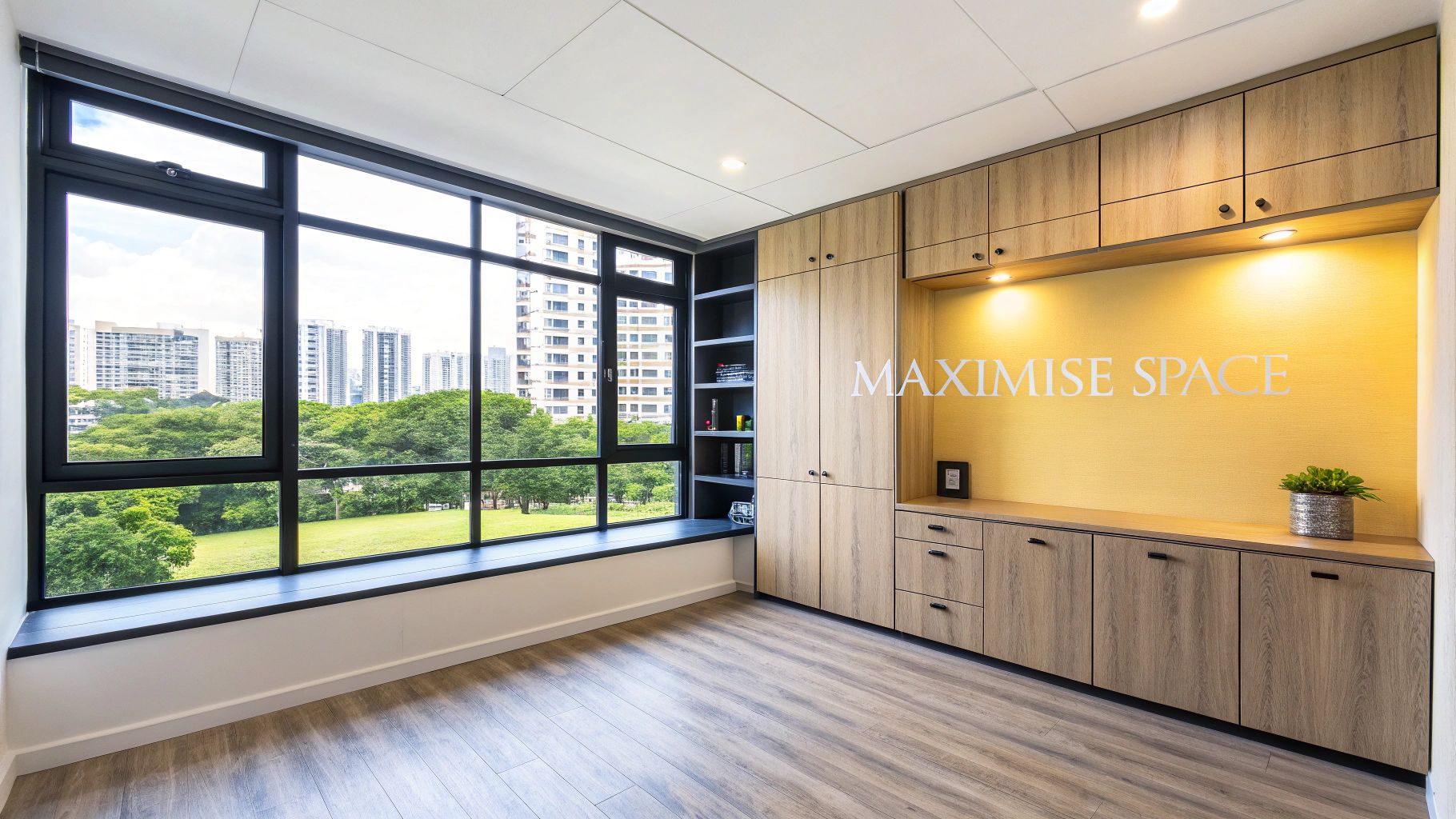
In Singapore, making every square centimetre count isn't just a nice idea—it's essential. Freestanding furniture often falls short, leaving awkward, dust-collecting gaps and failing to utilise the full height of a room. This is exactly where built in cabinets prove their worth. They are designed to integrate flawlessly with your home’s architecture, turning potential flaws into clever features.
Consider that odd-shaped corner in your bedroom or the empty vertical space above a doorway. These are often dead zones. With custom carpentry, we can convert them into purposeful storage, like a discreet shoe cabinet or a stunning floor-to-ceiling display unit. This is about more than just adding shelves; it's about reclaiming your space with intelligent design.
Maximising Space and Creating Flow
The biggest advantage of built in cabinets is their ability to maximise storage without consuming precious floor area. By building upwards, you draw the eye vertically, creating an illusion of height that makes the entire room feel larger and more open. It’s a game-changer, especially in compact HDB flats and condos.
A well-designed built-in system doesn't just store your belongings; it curates your living space. It integrates storage so seamlessly that it becomes part of the room’s architectural character, enhancing both form and function.
Here are a few actionable examples of how we achieve this for our clients:
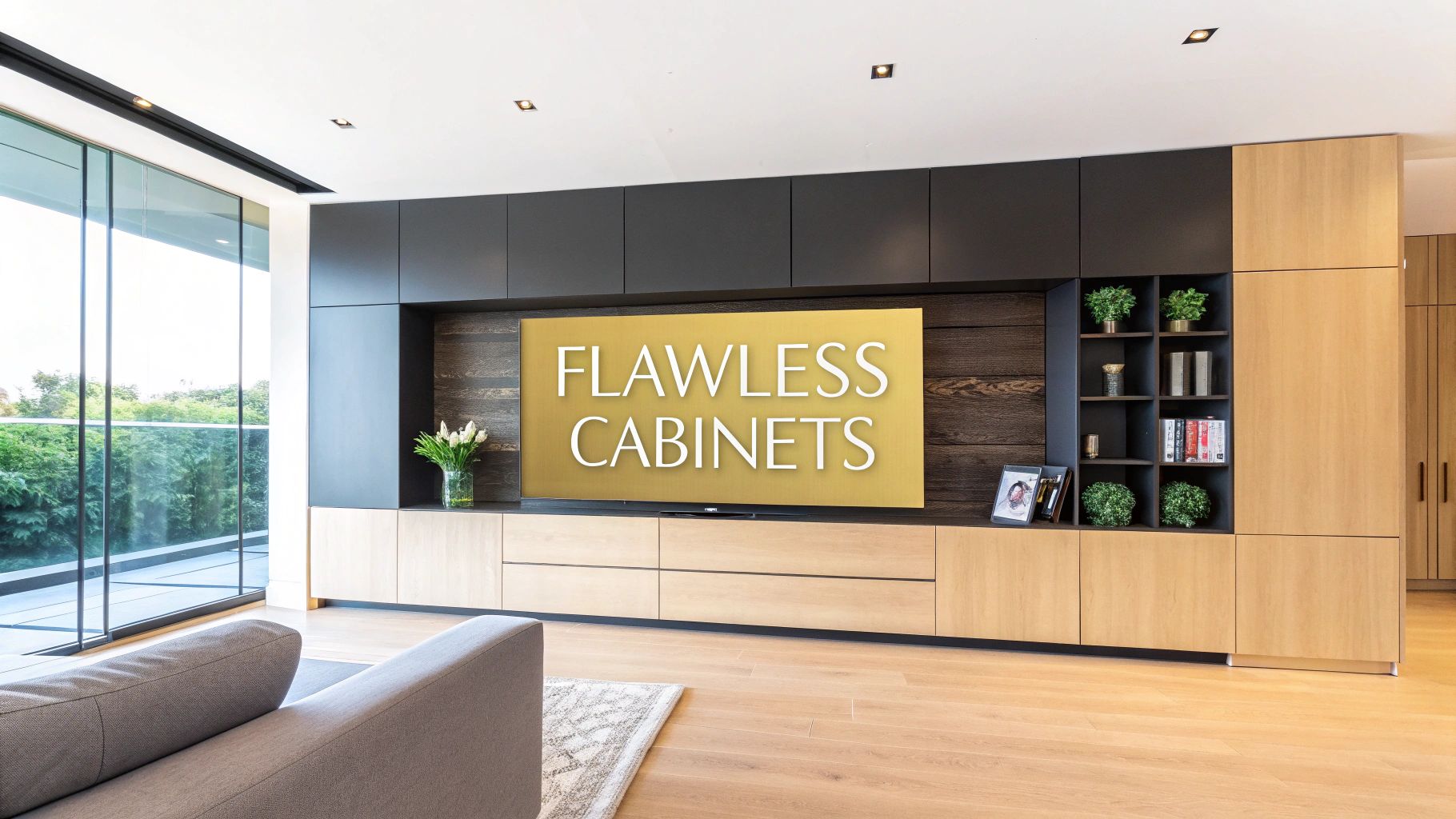
- Integrated TV Consoles: Instead of a standalone TV bench, we design a media unit that flows into surrounding display shelves or concealed cabinets. This creates a unified focal point and hides messy cables, routers, and game consoles.
- Full-Height Wardrobes: These eliminate that useless, dust-collecting gap above standard wardrobes. That newfound space is perfect for stashing bulky items like luggage, winter clothing, or spare bedding.
- Bay Window Storage: We often transform the area under a bay window into a cosy seating nook with deep, hidden drawers underneath. It adds both comfort and seriously smart utility, turning an architectural feature into a functional one.
Boosting Resale Value
Beyond the day-to-day benefits, investing in quality built in cabinets is a savvy move that can significantly boost your property's resale value. Potential buyers in Singapore are incredibly attuned to smart storage solutions. A home that features thoughtful, integrated cabinetry is seen as more valuable, organised, and move-in ready.
It showcases a modern, efficient approach to urban living, making your property a standout in a crowded market. This one-time investment provides daily returns in organisation and a potential financial return when it's time to sell.
Exploring Popular Cabinet Styles for Your Home
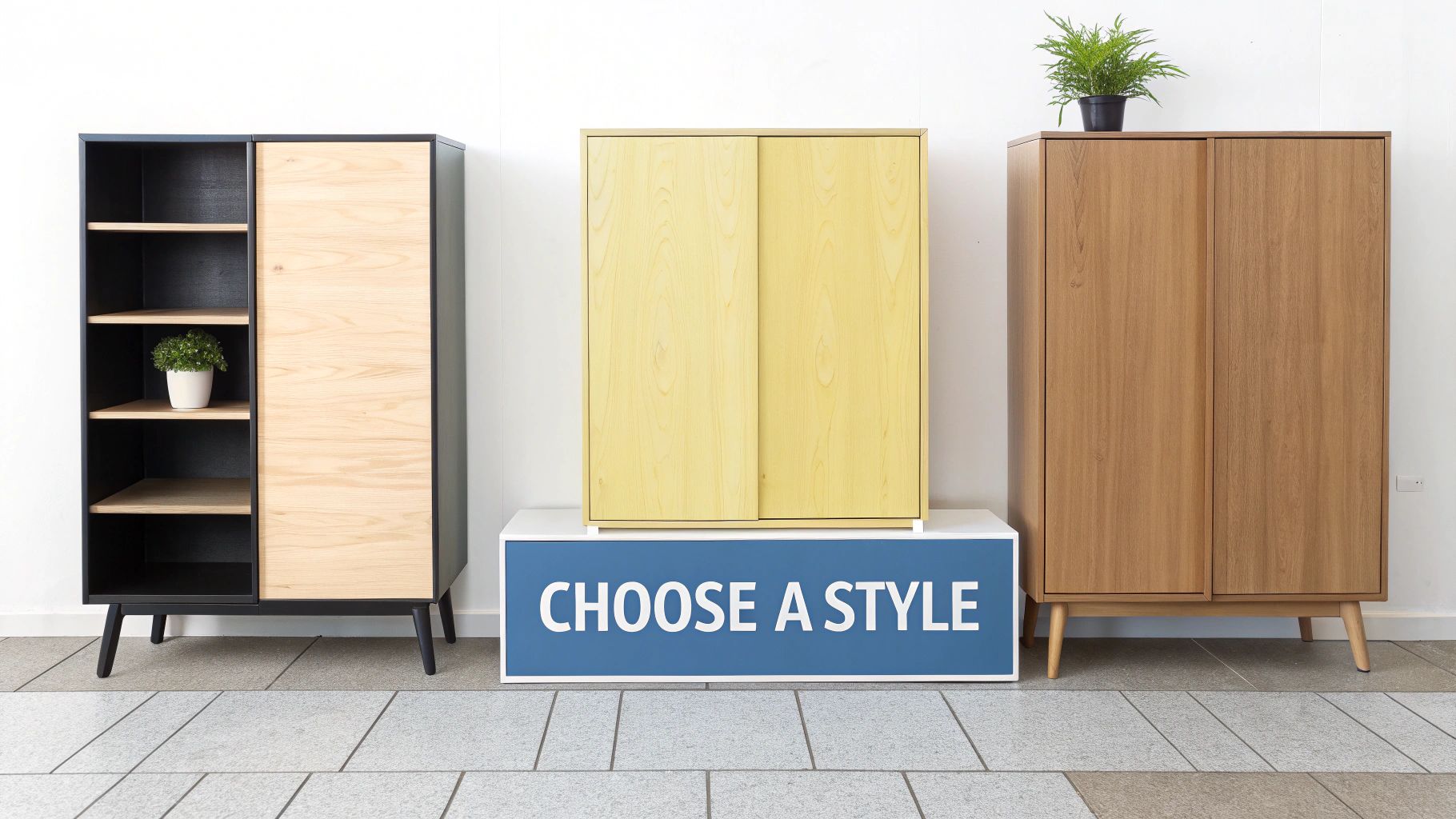
Choosing the right style for your built-in cabinets is about more than just picking a colour—it’s about setting the entire mood of your room. The right design can make a space feel larger, calmer, or more dynamic. Based on our client projects, we’ve seen a clear trend among Singaporean homeowners: a move towards aesthetics that perfectly blend smart function with a serene, uncluttered feel.
This shift makes perfect sense. In our experience, homeowners consistently prioritise storage and space optimisation above all else. When you consider that over 80% of residents live in public housing where every square metre counts, this isn't surprising. At the same time, there's a growing demand for storage solutions that don’t sacrifice style, which is fuelling the demand for beautiful, custom built-ins. You can dive deeper into the latest data on modern kitchen cabinet design trends in Singapore.
Let's walk through the three most requested styles we work with and see how they translate into stunning, practical cabinet designs for the modern home.
The Power of Minimalism
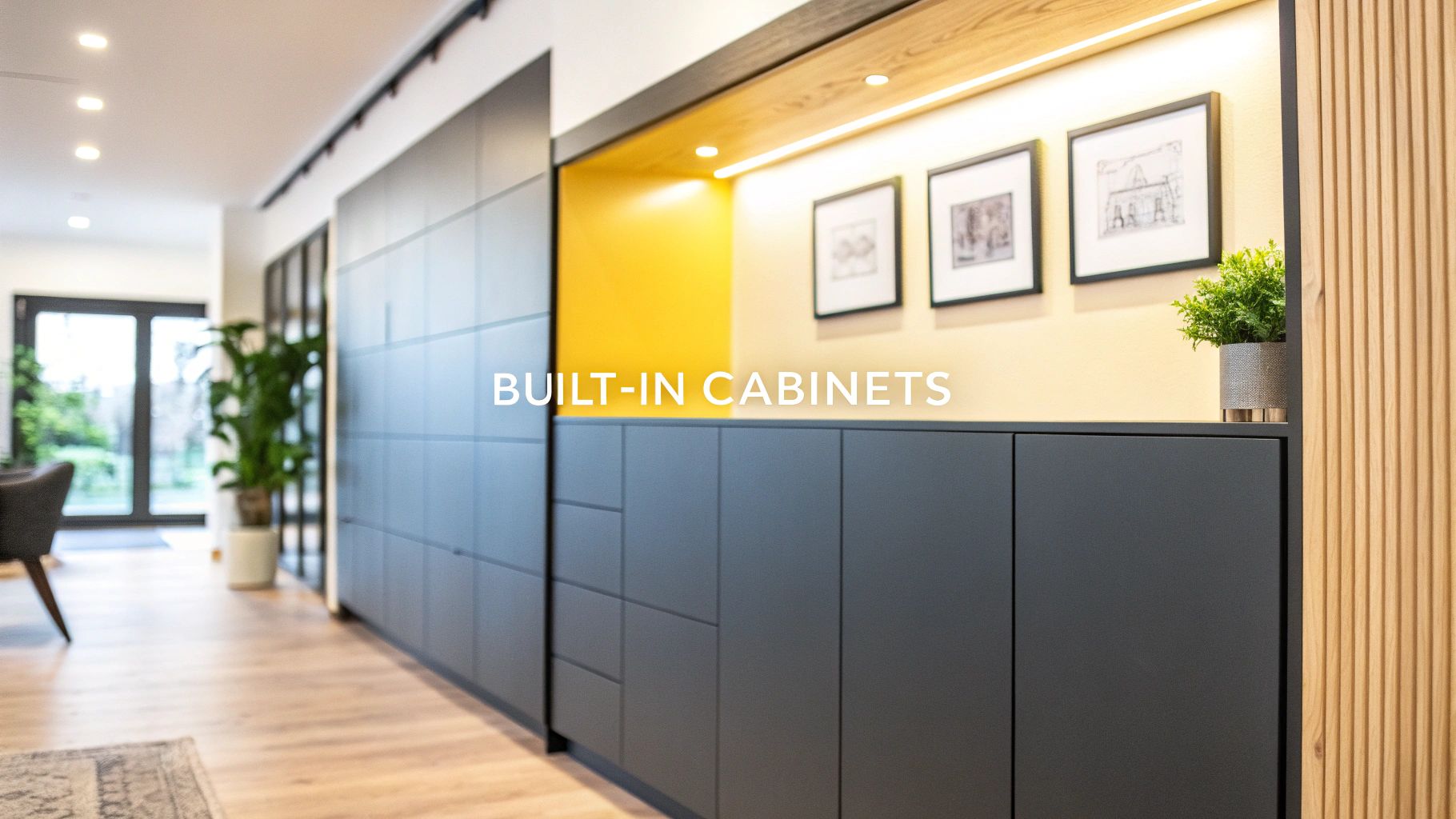
Minimalist design is all about the philosophy of "less is more." It’s about stripping everything back to its essential form to create a clean, spacious, and calming environment. When it comes to built-in cabinets, this means achieving a seamless, almost architectural look that blends right into the room.
The hallmarks of minimalist cabinetry are unmistakable:
- Flat-Panel Doors: No bevels, no ornamentation, just a completely flat surface. This creates a smooth, unbroken visual line.
- Handle-less Design: We use push-to-open mechanisms or integrated J-pulls. Getting rid of handles removes visual clutter and makes the cabinet profile incredibly sleek.
- Neutral Colour Palette: Think whites, greys, and soft earth tones. A monochromatic scheme helps the cabinets recede, almost melting into the walls to make the room feel bigger.
Practical Example: A floor-to-ceiling wardrobe in a small HDB bedroom. Finished in matte white with handle-less doors, it becomes an extension of the wall itself, providing vast storage without visually crowding the space.
The Calm of Scandinavian Design
Scandinavian style is loved for its focus on function, simplicity, and a connection to nature. It’s warm, inviting, and practical to its core. This aesthetic is all about creating a bright and airy feel, which makes it an ideal choice for many Singaporean homes.
Scandinavian design isn’t about cold, stark minimalism; it's about creating a cosy, functional, and light-filled home that feels both beautiful and lived-in.
Key elements you'll find in Scandinavian built-ins include:
- Light Wood Tones: Materials like light oak, ash, and maple are absolute staples. They introduce warmth and texture without ever feeling heavy or dark.
- Simple, Clean Lines: Much like minimalism, ornate details are out. But you might find subtle touches like slim, elegant handles or softly rounded edges that add a touch of softness.
- A Mix of Open and Closed Storage: This is a classic Scandi move. Balancing concealed cabinets with open shelving allows for curated displays of books and decor, adding personality and keeping the design from feeling too uniform.
Practical Example: A living room TV console built with a light oak veneer. It might have a mix of push-to-open drawers to hide clutter, alongside a few open niches for plants or favourite objects. The result is a functional focal point that feels organised yet warm and welcoming.
The Harmony of Japandi
Japandi is that beautiful sweet spot where Scandinavian functionality meets Japanese rustic minimalism. It truly takes the best of both worlds to create spaces that feel clean yet warm, celebrating craftsmanship, natural materials, and a deep sense of tranquillity. It's a style we've seen skyrocket in popularity for clients wanting their home to be a peaceful sanctuary.
Japandi-inspired cabinets are easy to spot once you know what to look for:
- Rich Natural Textures: This style often embraces darker wood tones like walnut or stained oak, frequently contrasted with lighter, neutral elements for balance.
- A Focus on Craftsmanship: The details really matter here. You might see visible joinery, fluted panels, or unique, artisanal hardware that feels special and adds character.
- An Emphasis on Imperfection (Wabi-Sabi): Japandi celebrates the beauty of natural materials as they are—including their unique grains and subtle imperfections. This adds a layer of depth and authenticity that’s impossible to fake.
Practical Example: A Japandi kitchen might pair dark wood-grain lower cabinets with light, creamy upper cabinets, tied together with minimalist black hardware. It creates a sophisticated, grounded, and deeply calming space for cooking and living.
Choosing the Best Materials for Durability and Style
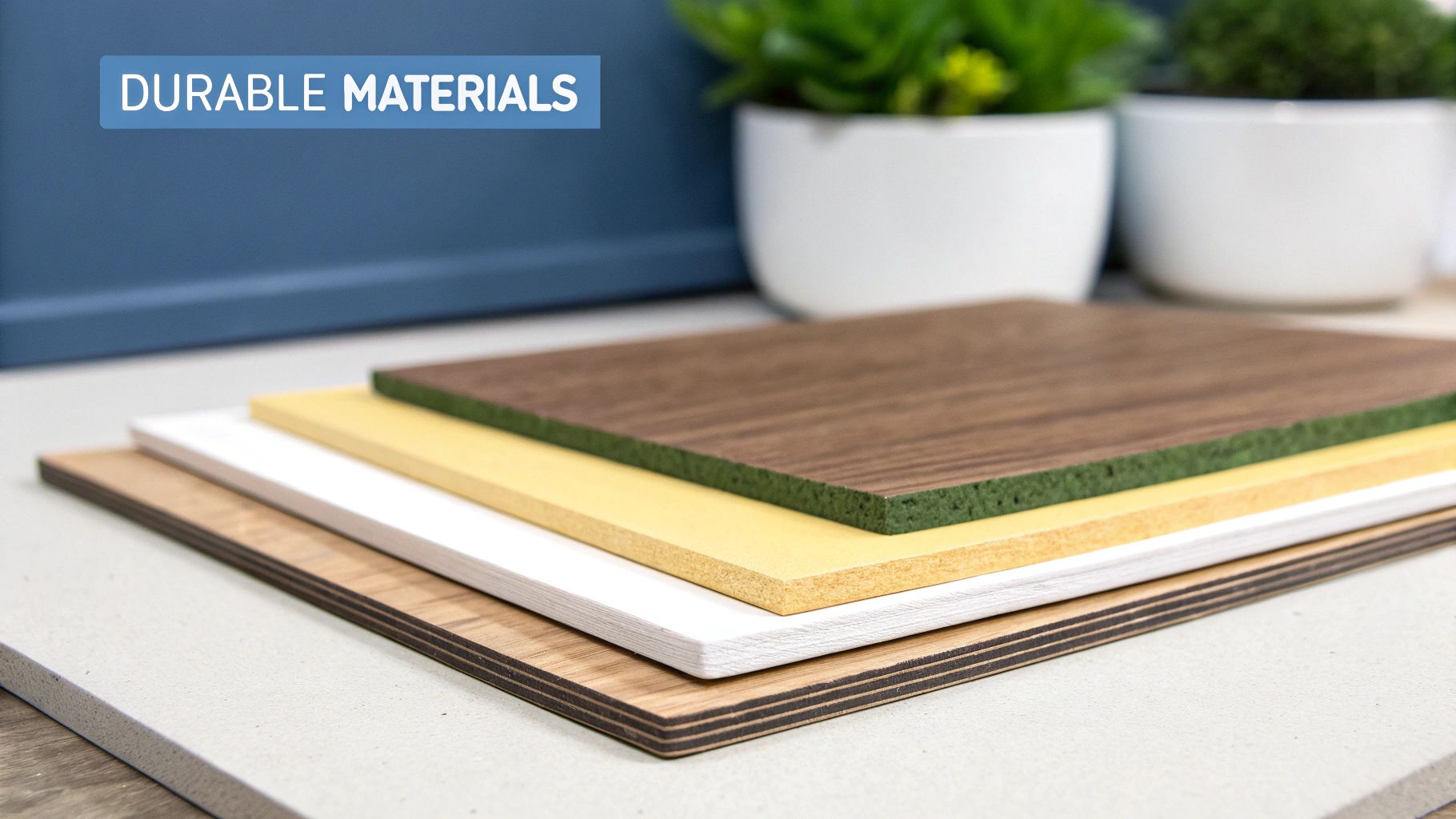
While the style of your built-in cabinets is what catches the eye, the material you choose is what makes them last. This decision is even more critical in Singapore’s humid climate, where the wrong choice can lead to warping and damage. The right material ensures your investment stays beautiful and functional for years.
Think of it this way: the external finish is the face of your cabinetry, but the internal structure—what we call the carcass—does all the heavy lifting. It's the unsung hero, and its durability is non-negotiable.
The Carcass: Core Materials for Singapore Homes
When we plan a project, the conversation always begins with the core material. In a humid environment like ours, not all materials are created equal. We find homeowners consistently choosing from a few key options, each with its own pros and cons.
Plywood: The Workhorse of Cabinetry
Plywood is made by layering thin sheets of wood veneer, with the grain of each layer glued at a right angle to the next. This cross-graining technique is what gives plywood its incredible structural strength and, most importantly, its high resistance to warping from moisture.
For cabinet carcasses, especially in damp-prone areas like kitchens and bathrooms, high-moisture resistant (HMR) plywood is the industry gold standard. Its layered build is far better at holding screws and fighting off humidity than particleboard or standard MDF.
Medium-Density Fibreboard (MDF): The Smooth Operator
MDF is an engineered wood product created by breaking down wood residuals into fine fibres, mixing them with wax and resin, and pressing them into dense panels. This process results in a perfectly smooth, uniform surface that’s a dream to paint or apply detailed finishes to.
However, standard MDF acts like a sponge in our climate, swelling up and losing its structure when it meets moisture. While moisture-resistant versions exist, plywood is still the undisputed champion for a robust, long-lasting carcass in Singapore.
Understanding Finishes: The Face of Your Cabinets
With the sturdy carcass sorted, the finish is what brings your vision to life. This is where you get to define the final look, feel, and even the daily maintenance routine for your built-in cabinets. It’s where your personal style truly shines.
Laminates: Practicality Meets Versatility
Laminates are multi-layered synthetic products bonded to a substrate like plywood. They come in a staggering range of colours, patterns, and textures—from hyper-realistic wood grains to sleek, solid matte colours and high-gloss sheens.
- High-Gloss Laminates: Fantastic for modern kitchens. Their reflective surface bounces light around, making the room feel brighter, and they are incredibly easy to wipe clean.
- Matte and Textured Laminates: Perfect for living rooms or bedrooms, these offer a sophisticated, fingerprint-resistant finish. They can convincingly mimic the look of natural materials like wood, stone, or even fabric.
Wood Veneers: The Authentic Choice
A wood veneer is a paper-thin slice of real wood applied to a stable core material like plywood. It gives you the genuine beauty and unique grain patterns of solid wood but without the hefty price tag or the risk of warping. Veneers offer a truly upscale, natural look that’s ideal for feature walls or luxury wardrobes.
Comparing Common Materials for Built In Cabinets
Choosing the right material is about balancing durability, your personal aesthetic, and your budget. This table breaks down the key characteristics to help you choose the best option for your needs in Singapore's climate.
| Material | Best For | Pros | Cons | Avg. Cost |
|---|---|---|---|---|
| Plywood Carcass | Kitchens, bathrooms, wardrobes—any high-use or moist area. | Excellent screw-holding strength, high moisture resistance, very durable. | Surface isn't as smooth as MDF for painting; higher cost. | Moderate-High |
| MDF Carcass | Dry areas like display shelves or decorative panels. | Perfectly smooth surface for paint finishes, budget-friendly. | Susceptible to water damage, can sag under heavy loads. | Low-Moderate |
| Laminate Finish | High-traffic areas, kitchens, and family-friendly spaces. | Highly durable, easy to clean, huge variety of designs. | Edges can be prone to chipping if not properly sealed. | Moderate |
| Wood Veneer Finish | Living rooms, bedrooms, and feature cabinetry. | Authentic look and feel of real wood, can be re-sanded. | More delicate than laminates, requires careful maintenance. | High |
Ultimately, the best strategy is often a combination of materials. We almost always recommend a solid plywood carcass for unmatched durability, paired with a laminate or veneer finish that brings your aesthetic vision to life. This smart approach ensures your built in cabinets aren’t just beautiful on day one, but remain a strong, reliable part of your home for years to come.
How to Budget for Your Built In Cabinet Project
You’ve decided on built-in cabinets—excellent choice. Now for the crucial part: planning the budget. A clear budget is your roadmap, guiding every decision from materials to design complexity, helping you put your money where it matters and avoid unexpected expenses.
The demand for smart, integrated storage is huge. In fact, Singapore’s cabinet market is projected to hit US$297.37 million in revenue for 2025. It’s a clear sign that homeowners are prioritising solutions that blend function and style. Breaking down the cost of just the cabinetry helps you see exactly where your investment is going. You can dig deeper into Singapore's furniture market trends on Statista.com for more data.
Breaking Down the Main Cost Drivers
Several key factors will influence the final bill for your custom cabinets. Understanding them helps you build a realistic budget.
These are the primary factors that determine the price:
- Size and Scope: The most straightforward factor. A massive, floor-to-ceiling wardrobe will cost more than a small TV console. We typically calculate costs based on the total length, priced per foot run (PFR).
- Material Selection: As covered, your choice of materials makes a big difference. A plywood carcass with a premium veneer finish will be at the higher end compared to an MDF structure with standard laminate.
- Design Complexity: A simple, flat-panel cabinet with basic shelves is more budget-friendly. Adding intricate details like fluted panels, glass doors, or custom internal organisers will increase labour costs.
- Hardware and Mechanisms: Don’t underestimate hardware. The hinges, handles, and drawer runners have a big impact on cost and daily usability. High-quality, soft-closing mechanisms from brands like Blum or Hafele are a fantastic investment in durability but cost more upfront.
Realistic Cost Estimates in Singapore
To give you a clearer picture, here are some general market estimates. These will vary based on the factors above but serve as a solid starting point for your budget planning.
A well-planned budget isn’t about limiting your vision; it’s about empowering it. Knowing the numbers allows you to allocate your resources smartly, splurging on the elements that matter most to you while finding clever ways to save elsewhere.
- Full-Height Wardrobe (6-foot): Expect to pay between S$2,400 to S$4,500. The lower end covers standard laminate finishes and a basic internal layout. The higher price point would include premium materials, mirrored doors, and more customised drawers.
- Kitchen Cabinetry (Standard HDB): A complete kitchen cabinet system typically falls between S$6,000 and S$12,000. This is heavily influenced by the total length, the countertop material, and features like a tall pantry unit or an island.
- Living Room TV Console (8-foot with display): For a custom console with both shelving and hidden storage, you're generally looking at a range of S$2,800 to S$5,000.
Smart Strategies to Manage Your Budget
Getting a high-end look doesn’t always demand a sky-high budget. Strategic thinking can help you make savvy choices that deliver big on style without breaking the bank.
Here are a few actionable tips we share with our clients:
- Mix and Match Materials: Use a durable, cost-effective laminate for the internal carcass and shelves that aren't visible. This frees up your budget to splurge on a beautiful veneer or textured laminate for the visible doors and panels.
- Simplify the Insides: Opt for more open shelving and fewer drawers. Drawers require complex runner mechanisms and more labour, making them a more expensive option compared to simple shelves.
- Choose Timeless Hardware: Instead of chasing trendy (and often pricey) handle designs, pick classic knobs or pulls. They are usually more affordable and have a timeless appeal that won't look dated in a few years.
- Prioritise Where It Counts: Spend your money on high-quality hinges and drawer runners for the cabinets you use every day, like those in your kitchen. For storage you access less often, standard hardware might be perfectly fine.
Your Step-by-Step Journey From Idea to Installation
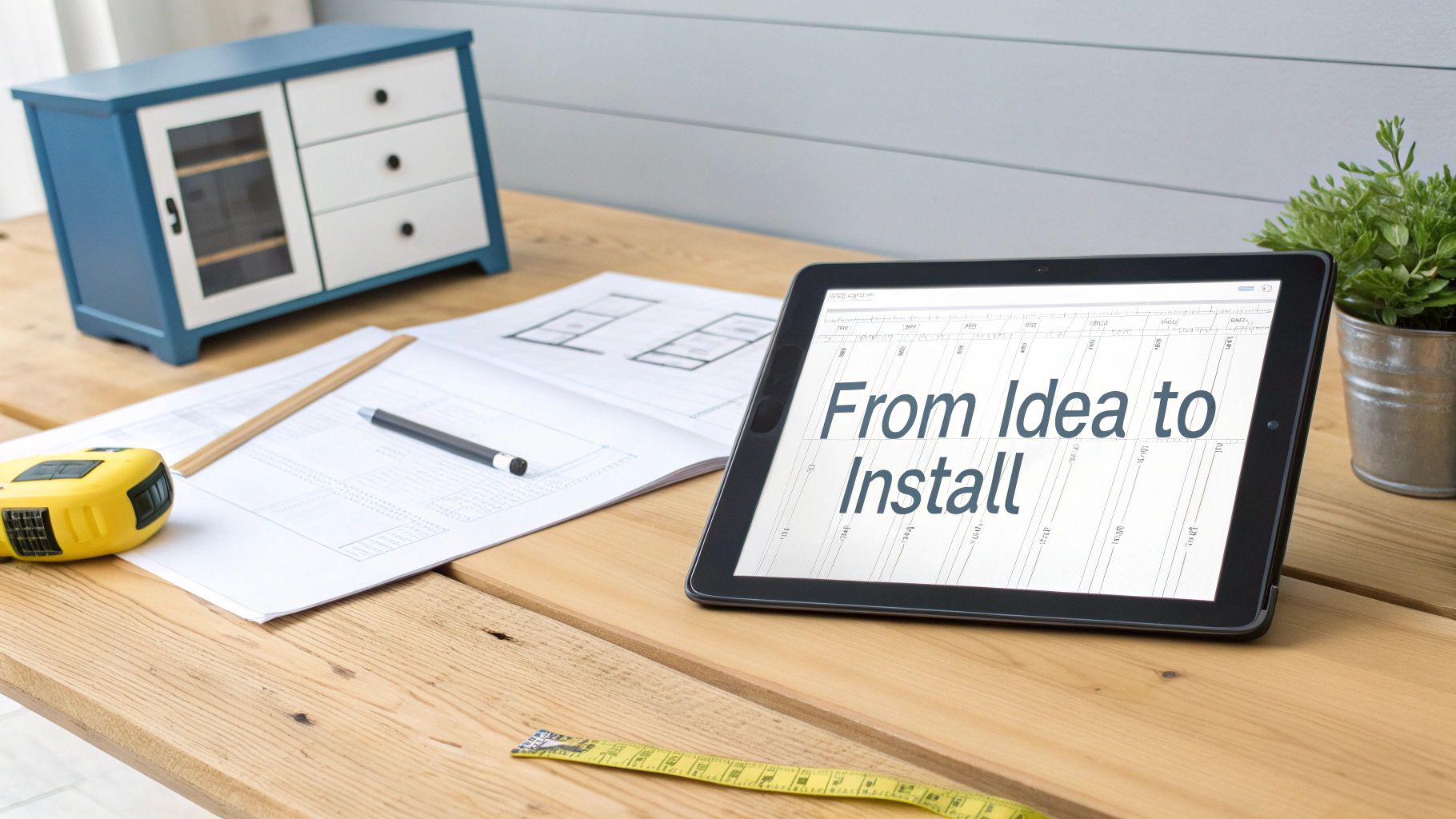
Turning an idea into beautifully finished built-in cabinets is a structured process designed to bring your vision to life with precision. Understanding this journey demystifies the experience, making it feel less like a daunting project and more like a creative partnership.
This roadmap helps you know exactly what’s coming next, what decisions you’ll need to make, and feel confident in the final outcome.
Phase 1: Initial Consultation and Site Measurement
This is where your project officially kicks off. We start with an in-depth chat to explore your needs, lifestyle, and aesthetic. It's about understanding how you live. Will these cabinets store fine china, kids' toys, or work files?
Following our talk, we conduct a meticulous on-site measurement. This isn't just about noting width and height. We look at every detail:
- The evenness of the floors and walls (they're rarely perfectly straight!).
- The location of existing power points, light switches, and data ports.
- Ceiling features, skirting boards, and other architectural quirks.
This detailed survey is critical, forming the technical foundation for a perfect fit.
Phase 2: Collaborative Design and 3D Visualisation
With precise measurements and a clear understanding of your goals, we move into the design phase. Using specialised software, we create detailed 3D renderings of your proposed built-in cabinets. This step is a total game-changer because it eliminates guesswork.
3D visualisation is the bridge between imagination and reality. It allows you to see exactly how the finished piece will look in your room—from its proportions and colours to the way it interacts with light—before a single piece of wood is even cut.
During this collaborative stage, you can experiment with different layouts, finishes, and hardware. We refine the design together until it’s perfect, locking in critical details like planning for new power outlets inside a TV console or integrating LED lighting into a wardrobe.
Phase 3: Material Selection and Finalisation
Once you’ve approved the design, the next step is choosing the materials. We’ll revisit the options—from durable plywood for the internal structure to the huge array of laminates and veneers for the external finish.
You’ll be able to see and touch physical samples, comparing textures and colours in the actual light of your home. This tactile experience is vital. We then finalise every specification in a detailed contract, including:
- The exact laminate codes or veneer type.
- The brand and model of hinges and drawer runners.
- The chosen handles or handle-less systems.
This detailed confirmation gives you complete transparency and locks in all elements before production begins.
Phase 4: Off-Site Fabrication
With all decisions finalised, our skilled carpenters get to work in our workshop. Fabricating your built-in cabinets off-site is a deliberate choice to minimise the disruption, dust, and noise in your home. The messiest part of the job happens with us, not you.
This approach also allows for far greater precision. Our workshop is equipped with specialised machinery that ensures every cut is exact and every joint is perfect. This meticulous off-site prep is the secret to a smooth, efficient installation.
Phase 5: On-Site Installation and Final Touches
This is the final phase, where your vision truly comes to life. Our professional installation team will bring the fabricated components to your home, ready for assembly. Their focus is on a seamless and respectful installation, carefully fitting each piece into place.
Depending on the project's complexity, this can take anywhere from two to five days. Our team works efficiently to assemble the cabinetry, scribe it to fit the unique contours of your walls, and install all hardware. We finish with a thorough clean-up and a final walkthrough with you to ensure every detail meets your expectations.
Your Top Questions, Answered
To wrap things up, let's tackle the most common questions we get from homeowners here in Singapore. Think of this as a quick guide to clear up any lingering doubts, helping you move forward with confidence.
How Long Does the Entire Built In Cabinet Process Take?
From the moment you sign off on the design to the final installation, a realistic timeframe for custom built-in cabinets is typically between four to eight weeks.
Let’s break that down:
- Design & Finalisation (1-2 weeks): This includes in-depth discussions, 3D drawings for your approval, and locking in all material and hardware choices.
- Fabrication (3-5 weeks): Our carpenters craft your cabinets in our workshop. This off-site work is the longest phase but keeps the disruption in your home to a minimum.
- Installation (2-5 days): Our team performs the on-site assembly, adjustments, and finishing touches.
It's important to factor this timeline into your larger renovation schedule. For example, flooring should ideally be finished before we install the cabinets, while some painting might be best left until after. Coordinating with your main contractor is key to a smooth process.
Are Built In Cabinets a Worthwhile Investment for HDB Flats?
Absolutely. In fact, for an HDB flat where every square foot is premium real estate, custom built-in cabinets are one of the smartest investments you can make. This isn't just about adding storage; it's about fundamentally improving the way your home feels and functions.
Freestanding furniture simply can't compete. It often leaves awkward, dust-collecting gaps and rarely makes use of the full vertical height of a room.
Think of built-in cabinetry as architectural problem-solving. It’s designed to transform the inherent limitations of a space into functional, beautiful assets that make your home feel larger and more organised.
For instance, a full-height wardrobe built into an HDB master bedroom can offer up to 30% more storage than a standard wardrobe simply by eliminating the dead space near the ceiling. That extra utility, combined with a seamless look, makes a huge difference to a flat's appeal and can boost its resale value.
What Is the Best Way to Clean and Maintain My New Cabinets?
Keeping your new built-in cabinets looking pristine is much easier than you might think. Regular, gentle care is all it takes to keep them looking fantastic for years. The right approach depends on the finish.
For Laminate Surfaces:
- For daily wipe-downs, a soft, damp microfibre cloth is your best friend.
- For stubborn spots, use a mild, non-abrasive cleaner diluted with water.
- Crucially, avoid harsh chemicals like bleach or scouring powders, as they can permanently damage the laminate finish.
For Wood Veneer Surfaces:
- Dust regularly with a dry, soft cloth.
- Clean with a wood-specific cleaner to nourish the veneer and maintain its natural lustre.
- Always wipe in the direction of the wood grain to prevent streaks.
The golden rule for maintenance in our climate is to ensure good ventilation. It’s the best way to prevent moisture from settling on surfaces. Also, make it a habit to wipe up spills immediately, paying close attention to the edges and joints. This simple practice will dramatically extend the life and beauty of your investment.
Ready to transform your space with beautifully crafted, functional built-in cabinets? At KIVO, our team of experienced designers and artisans is here to bring your vision to life with precision and creativity. Explore our custom carpentry services and start your design journey with us today.