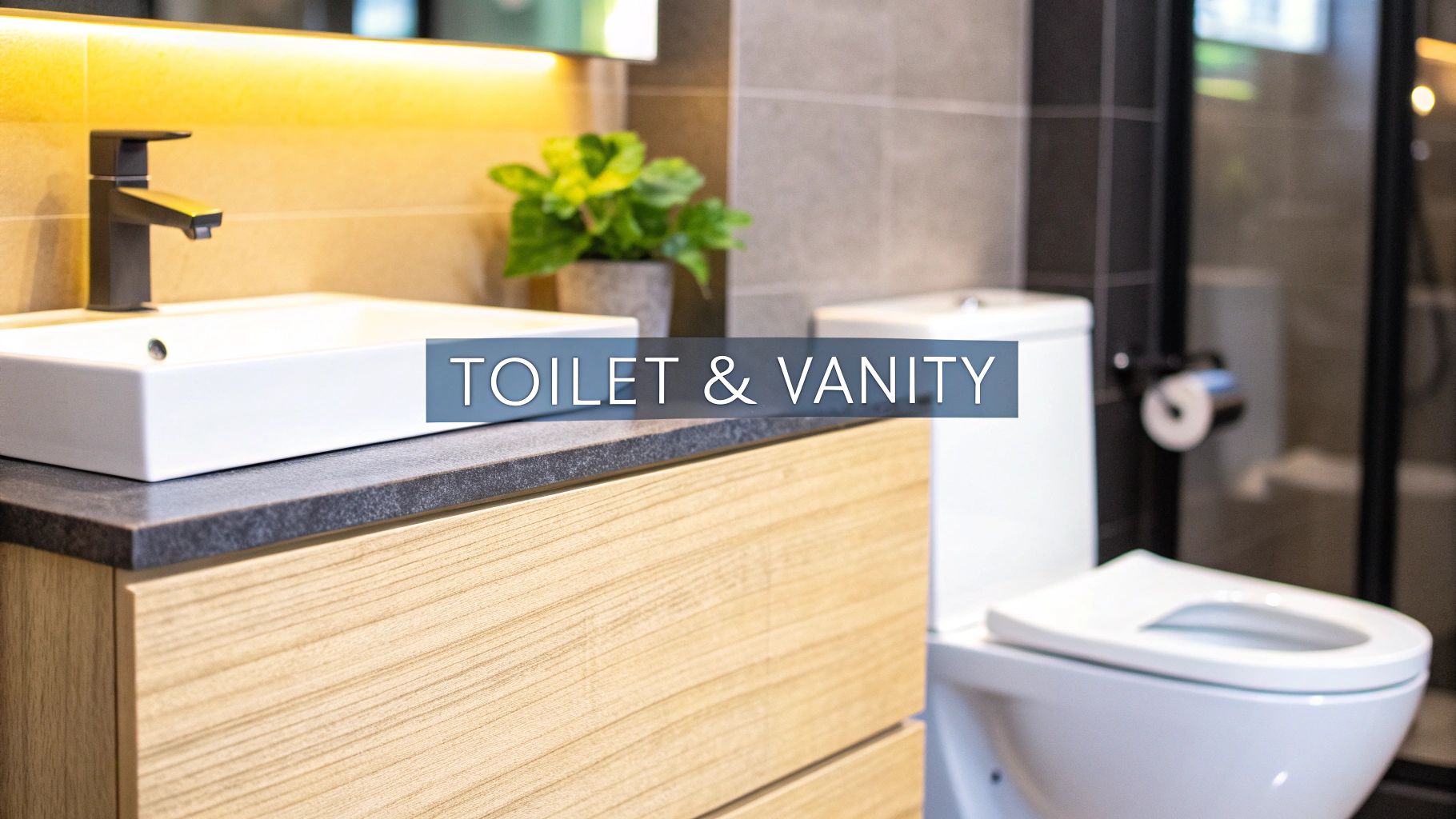
The toilet and vanity are the undisputed workhorses of any bathroom. Getting this pair right is critical for creating a space that actually supports your daily routine, not works against it. This is especially true here in Singapore, where we're often designing for compact HDB flats and condos.
From our experience with countless Singaporean homeowners, success comes from matching your choices not just to your aesthetic, but to the real-world limitations and opportunities your space presents. This guide cuts through the fluff to give you the actionable insights we share with our clients.
Matching Your Toilet and Vanity to Your Home
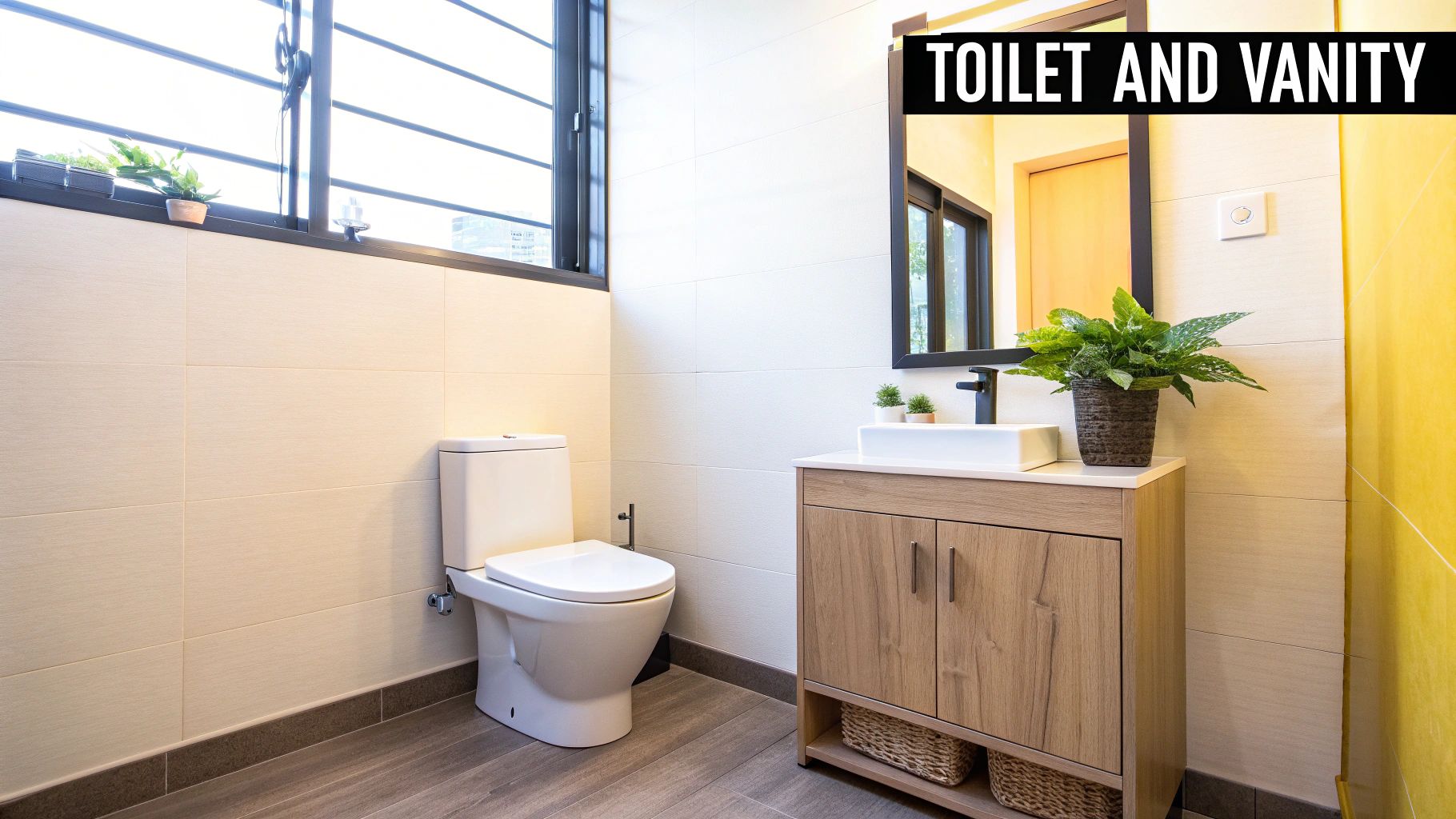
A cohesive and functional bathroom begins with seeing the toilet and vanity as a team. These two fixtures anchor the room's layout and style. One shouldn’t overpower the other. A bulky, traditional vanity next to a hyper-modern, wall-hung toilet, for instance, creates a visual clash.
A better pairing is a sleek floating vanity, which beautifully complements the space-saving effect of a wall-hung toilet. This combination makes the entire room feel larger—a common request from our clients with new BTO flats. The goal is a balanced design where both pieces feel intentionally chosen for each other.
Key Considerations for Singaporean Homes
In Singapore, bathroom design almost always boils down to two critical factors: space constraints and water efficiency. HDB and condo bathrooms often have tight layouts, making every centimetre count.
- For smaller bathrooms: A wall-hung toilet paired with a floating vanity is the go-to solution. By lifting both fixtures off the floor, you create an uninterrupted line of sight that instantly makes the room feel more spacious. This is a practical trick we use constantly.
- For larger, master bathrooms: You have more room to play. A freestanding vanity can serve as a stunning statement piece, paired with a comfortable one-piece toilet that offers a clean, seamless silhouette.
Water efficiency is non-negotiable. Singapore's sharp focus on water conservation has influenced modern toilet design. National initiatives have pushed for replacing old 9-litre-per-flush toilets with new, highly efficient models.
Making this one switch can cut a household's water consumption and potentially save you up to 10% on your monthly water bills. Choosing a PUB-rated water-efficient model isn’t just an eco-friendly decision. It’s a practical, long-term investment that keeps you aligned with national standards and lowers your utility costs.
Balancing Style with Practicality
Your choice of toilet and vanity must reflect your personal style while meeting the demands of your household. Think about who uses the bathroom daily.
- Practical Example: A family with young kids will prioritise a sturdy, floor-mounted vanity with ample, easy-to-reach storage over a delicate pedestal sink that offers none.
- Aesthetic Example: For a guest powder room used less frequently, aesthetics can take the lead, allowing for a more design-forward combination like a console sink with exposed plumbing.
We always start projects by discussing our clients' daily routines. This ensures the final design is not just beautiful, but perfectly functional for how they actually live.
Quick Guide to Toilet and Vanity Pairings
To simplify your decision, here’s a quick rundown of pairings that we've found work exceptionally well for different types of Singaporean homes.
| Bathroom Type | Recommended Toilet | Ideal Vanity Style | Key Benefit |
|---|---|---|---|
| HDB/BTO Bathroom | Wall-Hung Toilet | Floating or Slimline Vanity | Maximises floor space, creates an airy feel |
| Condo Master Bathroom | One-Piece Toilet | Double Freestanding Vanity | Luxurious feel, ample storage and counter space |
| Guest Powder Room | Compact Close-Coupled | Pedestal or Console Sink | Elegant and space-efficient for small areas |
| Landed Property Bathroom | Smart Toilet | Custom-Built Vanity | High-tech features and personalised storage |
This table serves as a great starting point, but the best combination is one that truly fits your lifestyle and the unique character of your home.
Mastering Bathroom Layout and Measurements
A beautiful bathroom is built on a foundation of precision. In Singapore, where every centimetre counts, getting the layout right for your toilet and vanity isn't just a good idea—it's everything. This one step dictates the room's flow, its daily function, and whether it feels spacious or frustratingly cramped.
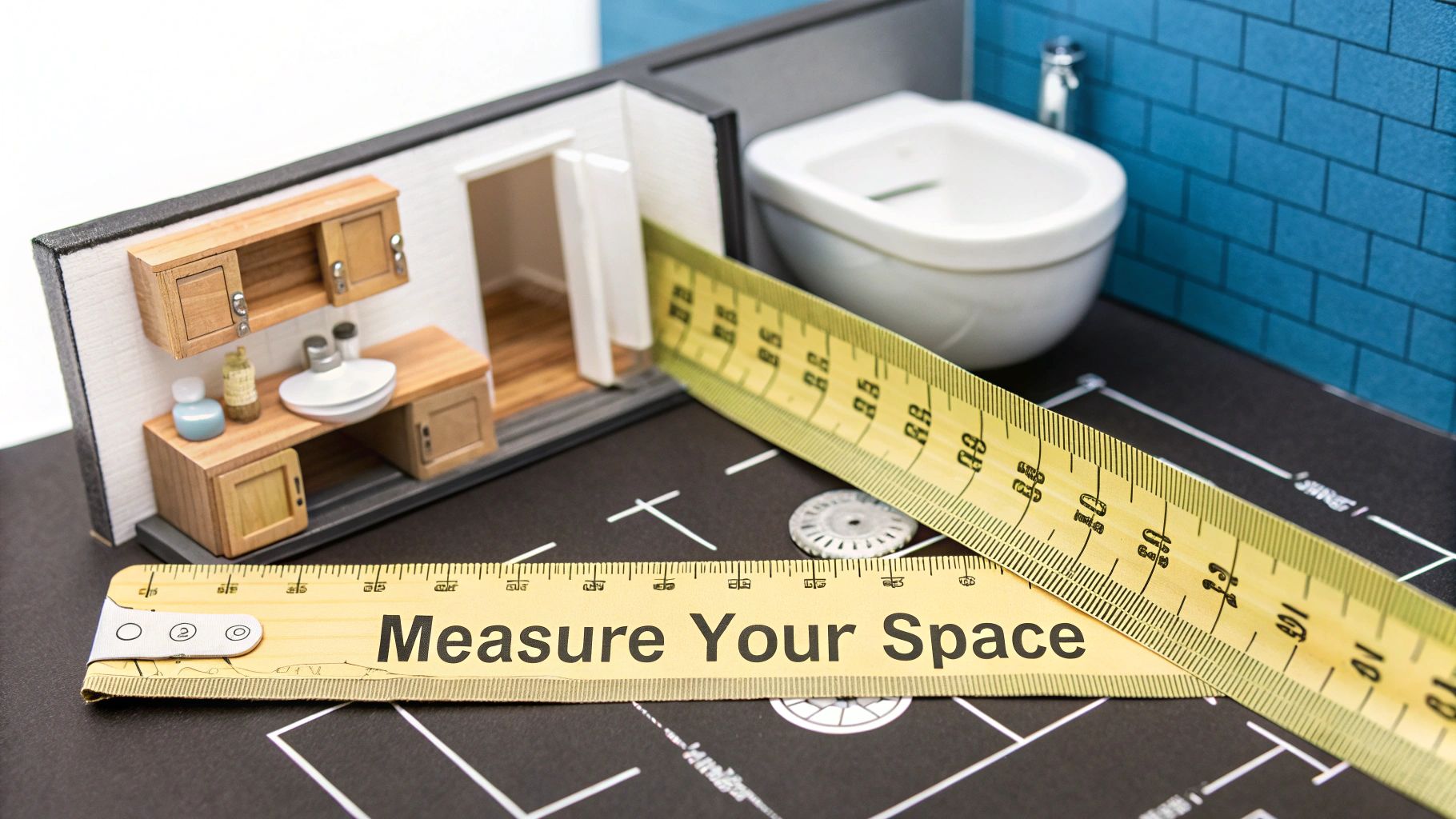
Thinking about spacing after you’ve bought your dream vanity is a recipe for disaster. It leads to cramped corners, doors that can’t open properly, and costly changes. Your tape measure is your most important tool at this stage.
The Critical Toilet Rough-In Dimension
Before browsing for toilet models, you need to know your "rough-in" dimension. This is the single most important measurement for any toilet installation. Get it wrong, and the toilet simply will not fit.
The rough-in is the distance from the finished wall behind the toilet to the dead centre of the floor drainpipe. Here in Singapore, the standard is typically either 150mm (6 inches) or 250mm (10 inches).
- How to Measure: Grab a tape measure and run it from the wall itself (not the skirting board) to the absolute centre of the waste outlet pipe.
- Why It Matters: You cannot fit a toilet with a 250mm rough-in into a 150mm outlet without calling in plumbers for major, costly work. Always confirm this before you buy.
Planning for Clearance and Comfort
Once the rough-in is sorted, it’s time to plan for "breathing room" around your toilet and vanity. This creates a space that feels comfortable and easy to use.
Here are the key clearance numbers we work with on our projects:
- Side Clearance for the Toilet: Aim for a minimum of 30cm from the centre line of the toilet to the nearest wall or fixture, like your vanity or a shower screen. This provides a total width of at least 60cm, which makes a world of difference in comfort.
- Forward Clearance for the Toilet: You need at least 60cm of clear space in front of the toilet bowl. Anything less and you'll feel completely boxed in.
- Vanity Door and Drawer Swing: This is the measurement everyone forgets. Fully open all vanity doors and pull out every drawer. Measure that distance and ensure it doesn't crash into the toilet, the shower door, or the main bathroom entrance.
Practical Example: We once had a client who fell in love with a gorgeous, wide vanity for their new BTO flat. The problem? The main bathroom door could only open halfway before it hit the corner of a drawer. We had to quickly pivot to a custom, narrower design. Always account for swing space.
Getting Vanity and Mirror Height Just Right
How comfortable your bathroom is day-to-day comes down to good ergonomics. The height of your vanity and the placement of your mirror should feel natural.
Standard Vanity Height
The standard height for a vanity countertop usually falls between 80cm to 90cm from the finished floor. From our experience, 85cm is the comfortable sweet spot for most adults in Singapore. However, this is adjustable. If your family is on the taller side, pushing it towards 90cm can save a lot of back-bending.
Mirror Placement Rules
A well-placed mirror balances the room and bounces light around.
- Centre the Mirror: The mirror should be centred over the entire vanity unit, not just the sink basin, for a clean aesthetic.
- Set the Height: The vertical middle of the mirror should be roughly at eye level for an average user. A great rule of thumb is to hang the mirror so its bottom edge is 10-20cm above the vanity countertop. This prevents water splashes while keeping the reflection practical.
If you have a family with big height differences, a taller, portrait-style mirror is a fantastic solution that gives everyone a comfortable viewing angle.
Choosing Materials and Styles That Last
The materials you pick for your toilet and vanity are more than just a pretty surface. They are the foundation of your bathroom's durability and will dictate your daily cleaning routine for years. Choosing materials that can stand up to daily use and Singapore's humidity is essential.
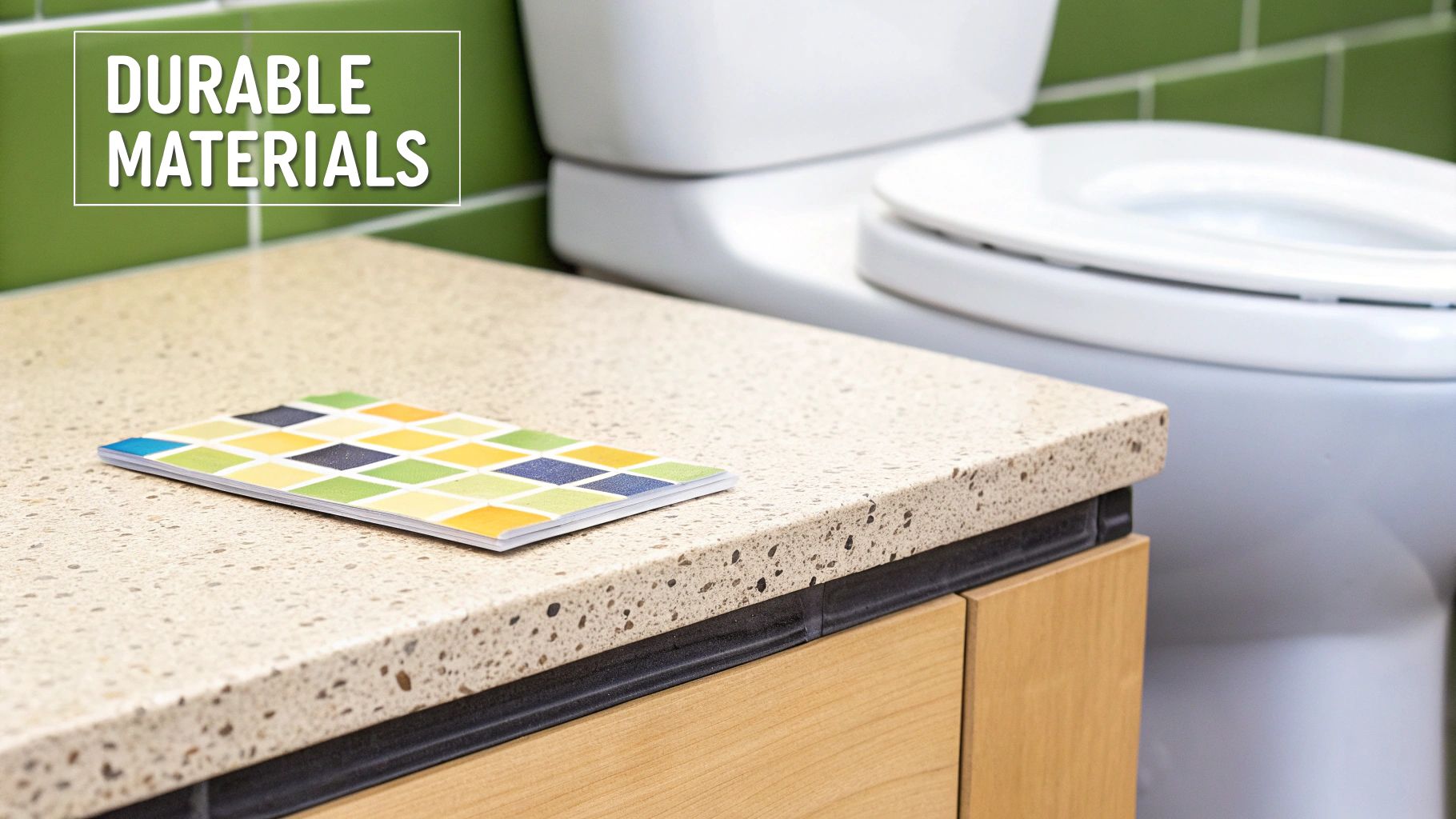
This decision determines whether you spend your time enjoying your bathroom or endlessly scrubbing it. High-quality, non-porous surfaces make cleaning a breeze, while cheaper options might stain, peel, or warp.
Selecting a Durable and Hygienic Toilet
Most toilets are made from vitreous china, a tough and glossy ceramic. The real game-changer, however, is the quality of the glaze.
Many modern toilets now come with advanced glazes that have antibacterial properties. These special coatings create an ultra-smooth surface that actively resists stains and waste build-up, meaning a cleaner bowl with far less scrubbing.
Another feature we always recommend is a rimless design. Old-school toilets have an inner rim where water flows—a notorious hiding spot for germs and limescale. Rimless toilets eliminate that groove, allowing for a powerful, hygienic flush that cleans the whole bowl every time.
Vanity Materials Built for Singapore's Climate
Choosing a vanity requires careful thought, especially given our humid environment. The wrong material can swell, peel, or become a breeding ground for mould.
- Solid Plywood with Laminate: This is our go-to recommendation for almost every bathroom project in Singapore. High-quality, moisture-resistant plywood provides a strong, stable core that won’t warp. Finished with a high-pressure laminate (HPL), you get a surface that’s incredibly durable, water-resistant, and easy to clean.
- MDF with Laminate: Medium-Density Fibreboard (MDF) is a more budget-friendly option. It offers a smooth finish, but its weakness is water. If MDF gets wet, it can swell and disintegrate. We only suggest this for powder rooms with very little moisture, and even then, it must be sealed perfectly.
- Solid Wood: While beautiful, a solid wood vanity is high-maintenance in our climate. It must be expertly sealed and regularly maintained to prevent warping or cracking. We typically reserve this for larger, well-ventilated bathrooms where aesthetics are the absolute priority.
We consistently steer our clients toward solid plywood for their custom vanity carpentry. Its structural integrity and superior moisture resistance make it a smart, long-term investment that stands up to the daily rigours of a Singaporean bathroom. Research on public sanitation standards reinforces why choosing durable, non-porous materials for your home bathroom is so critical for good hygiene.
Vanity Material Comparison for Singapore's Climate
With our humidity, the material you choose for your vanity base is critical. This quick comparison can help you weigh the options.
| Material | Durability | Moisture Resistance | Cost | Best For |
|---|---|---|---|---|
| Solid Plywood | Excellent | Very High | Mid to High | All bathrooms; the most reliable long-term choice for Singapore. |
| MDF | Fair | Low | Low | Powder rooms or dry areas only; not for high-moisture zones. |
| Solid Wood | Good | Moderate (when sealed) | High | Large, well-ventilated luxury bathrooms with diligent maintenance. |
| PVC (Plastic) | Good | Excellent | Low to Mid | Budget-conscious projects where water resistance is the top priority. |
Solid plywood remains our top recommendation for its balanced performance and longevity in this climate.
Countertop Choices for Style and Practicality
The vanity countertop faces water, soap, and cosmetics daily. It must be practical.
- Quartz: An engineered stone that’s non-porous, incredibly durable, and tough against stains and scratches. It offers the look of natural stone without the high maintenance.
- Solid Surface: Materials like Corian allow for a seamless look, with the sink integrated directly into the countertop. No seams means nowhere for grime to collect.
- Sintered Stone: A premium choice known for its bulletproof durability. It's practically indestructible—resistant to scratches, heat, and stains, making it an amazing option for a busy family bathroom.
Pairing Materials with Popular Design Themes
Your material selections bring your design theme to life. Based on current client preferences, these combinations work beautifully.
- Scandinavian: Pair light wood laminates on a solid plywood vanity with a clean, white solid surface countertop. This creates the bright, airy, and natural vibe this style is known for.
- Industrial: Combine a concrete-look quartz countertop with a dark grey or black laminate vanity. Finish with matte black taps and fixtures for an edgier look.
- Minimalist: Achieve this look with a seamless, integrated sink and countertop made from pure white solid surface material, set atop a handleless, floating vanity.
Getting the Plumbing and Installation Right
Choosing the perfect toilet and vanity is one thing; ensuring they’re installed flawlessly is another. A great installation is something you never notice, but a bad one reminds you daily with leaks, wobbly fixtures, and frustration.
Understanding the plumbing in your HDB flat or condo from the start prevents expensive mistakes.
S-Trap vs. P-Trap: The Most Important Toilet Decision You’ll Make
Before you get attached to a particular toilet model, you must check your existing plumbing.
- S-Trap Toilets: The waste pipe goes straight down into the floor. This is the standard in the vast majority of HDB flats and landed homes in Singapore.
- P-Trap Toilets: The waste pipe goes out through the wall behind the toilet. These are less common in homes but do exist.
This is a hard plumbing reality. You must buy a toilet that matches your existing pipes. Trying to switch from an S-trap to a P-trap (or vice versa) involves major, costly plumbing work that’s often disruptive and may not be permitted. Always confirm your trap type before buying.
Nailing the Vanity Installation
Installing a vanity is a job of precision. The sink’s drain must align perfectly with the plumbing outlet to avoid slow drainage or leaks.
Proper waterproofing is just as critical. We ensure the wall behind the vanity and the floor underneath are properly sealed to stop moisture from getting into the structure. This is especially vital for wall-hung units that need serious support.
A heavy, wall-hung vanity loaded with toiletries puts immense stress on a wall. We always reinforce the wall with internal blocking or use heavy-duty fasteners to ensure it can handle the weight. Skipping this is a huge safety risk.
Common Installation Mistakes We See (And How to Avoid Them)
From our years on site, a few installation mistakes pop up again and again.
- Incorrect Toilet Flange Sealing: The wax ring or rubber seal between the toilet and the floor drain is critical. If not seated perfectly, you’ll get slow, hidden leaks that can ruin your flooring and the ceiling of your downstairs neighbour.
- Wrong Vanity Height: A vanity that’s too low or too high is uncomfortable. While there's a standard height, it should be adjusted to fit your family for better ergonomics.
- Forgetting About Cleaning and Ventilation: A poor installation can create awkward, impossible-to-clean gaps behind the toilet or vanity. Good design accounts for future maintenance and hygiene.
Studies on how design impacts public hygiene on YouTube show that poor installation and fixture choices contribute to maintenance issues. This highlights why professional installation—with a focus on ventilation and easy cleaning—is so essential in our own bathrooms.
Integrating Lighting, Mirrors, and Storage
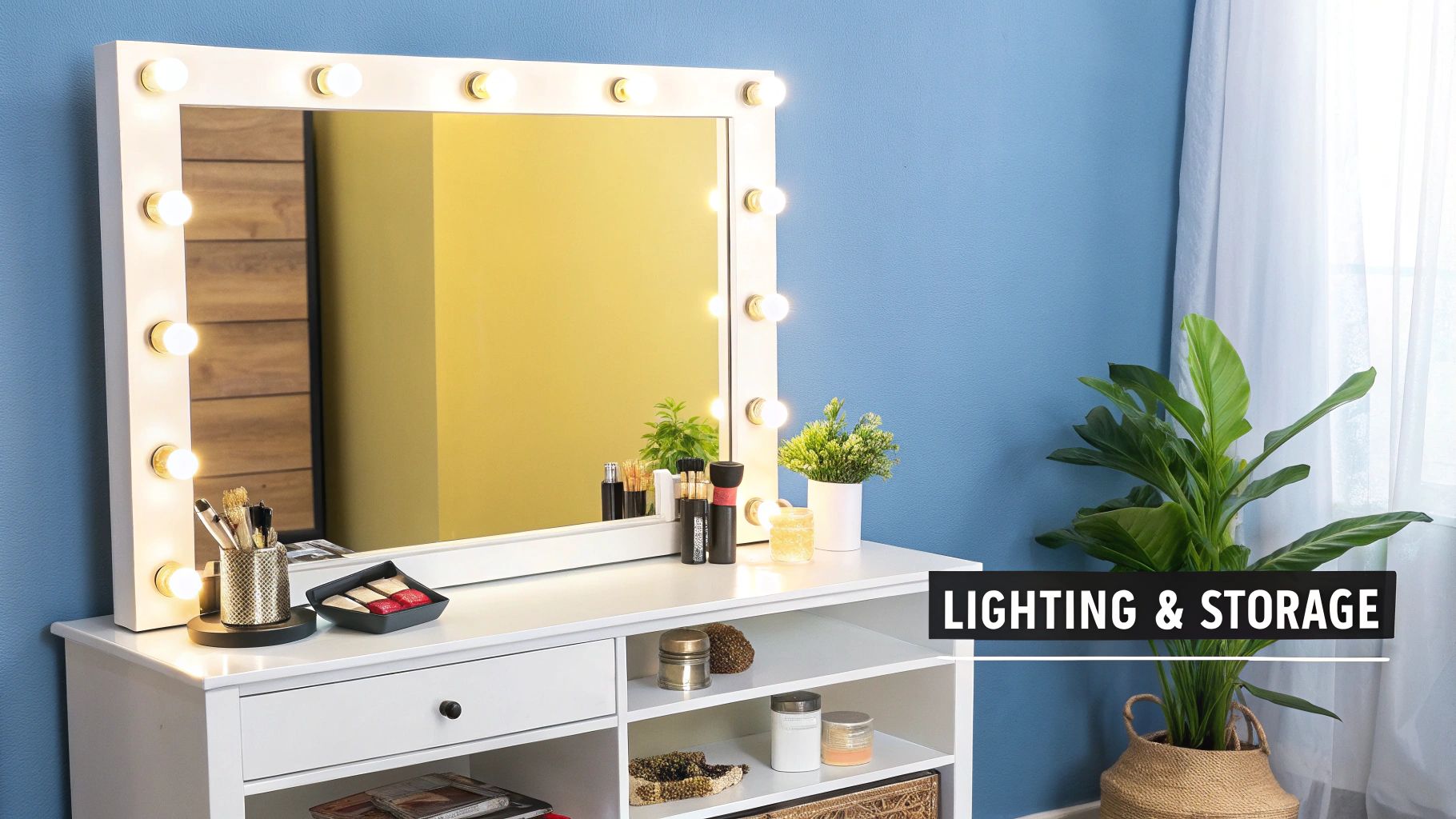
Once your toilet and vanity are placed, it's time to bring the room to life. Lighting, mirrors, and storage are essentials that complete the design and make daily routines smoother, especially in the compact layouts common in Singapore.
A common mistake is relying on a single, harsh ceiling light, which leaves the vanity area shadowed. We always recommend a multi-layered lighting strategy.
A Multi-Layered Lighting Strategy
Great bathroom lighting combines three distinct types of light.
- Ambient Lighting: The room’s overall glow, usually from a central fixture or downlights, for general brightness.
- Task Lighting: Focused, get-the-job-done light. Around the vanity, this should come from sconces on either side of the mirror or integrated lighting to eliminate shadows on your face.
- Accent Lighting: This creates mood. Think of a small spotlight on a tile feature or soft strip lighting under a floating vanity.
The most effective task lighting comes from the front, not from above. Placing lights directly over the mirror casts harsh shadows. Side-mounted sconces at eye level provide even, flattering illumination perfect for grooming.
Choosing the Right Mirror
A mirror is a powerful design tool that can bounce light, create an illusion of depth, and act as a focal point.
A good rule of thumb is to choose a mirror that is slightly narrower than the vanity itself. This creates a clean, balanced frame.
In recent years, we've seen a huge shift towards mirrors with integrated tech.
- Backlit Mirrors: Offer brilliant, shadow-free task lighting with a clean, modern feel.
- Smart Mirrors: Many new models come with anti-fog demisters—a lifesaver in steamy bathrooms—and Bluetooth connectivity.
- Framed vs. Frameless: A simple frameless mirror is perfect for minimalist designs, while a framed mirror can add personality and tie into other finishes.
Maximising Storage in Compact Spaces
Clutter is the enemy of a calm bathroom. In Singapore, where every square centimetre counts, clever storage is non-negotiable.
Custom carpentry allows us to build solutions that fit a space perfectly.
- Recessed Shower Niches: Building storage into the shower wall gets shampoo bottles off the floor and ledges for a cleaner look.
- Tall Cabinets: A narrow, floor-to-ceiling cabinet can hold a surprising amount of towels and supplies without taking up precious floor space.
- Over-the-Toilet Storage: The wall above the toilet is often wasted space. A stylish wall-mounted cabinet or simple open shelving can make it incredibly practical.
By thoughtfully weaving these three elements together—lighting, mirrors, and storage—you elevate your bathroom from a basic utility room to a cohesive, beautiful space that works for you.
Common Questions About Toilets and Vanities
Over years of handling bathroom projects, a few key questions always pop up. Here are the answers to the most common queries we get.
How Much Space Do I Need Around My Toilet in an HDB Flat?
In a typical HDB flat, every centimetre counts. From our experience, you should aim for a minimum of 20-25cm of clear space on both sides of the toilet, measured from the centre line of the bowl to the nearest wall or fixture.
Just as important is the space in front. You'll want at least 60cm of unobstructed room in front of the bowl for comfortable access. Always check the swing of your bathroom door and any vanity drawers to ensure they don't collide.
What Is the Difference Between an S-Trap and a P-Trap Toilet?
This is a critical technical detail. The "trap" is the curved pipe that blocks sewer gases.
- An S-trap toilet has its waste pipe going straight down into the floor. This is the standard in the vast majority of HDB flats and landed properties in Singapore.
- A P-trap toilet sends its waste pipe out through the wall behind it.
You must check which type you have before buying a new toilet. Trying to switch from one to the other involves major, expensive plumbing work that often isn't possible in an HDB setting.
Confirming these technical specifications at the start of a project prevents clients from buying a beautiful fixture they simply cannot install, saving them time, money, and disappointment.
Can I Install a Wall-Hung Toilet and Vanity in My HDB Bathroom?
Yes, you can. Wall-hung fixtures are a fantastic way to get a sleek, modern, and easy-to-clean look, but there are important considerations.
Both require a concealed frame (or cistern for the toilet) hidden inside the wall. This usually means building a slim false wall, which will slightly reduce your bathroom's floor space.
The most critical factor is the wall's structural integrity. It must be strong enough to safely support the weight. We always insist on an experienced contractor who can properly assess the wall and ensure the installation meets all HDB guidelines. It's a great look, but it has to be done right.
Proper installation is also the best prevention for common plumbing issues. For troubleshooting, learning what to do when your toilet is clogged is a good start, but a professional installation is your best defense.
Ready to create a bathroom that perfectly blends function and style? At KIVO, our team of experienced designers and master carpenters are here to bring your vision to life. Explore our custom interior design services and start your transformation journey today.